
Professional Window Film Installation: The Ultimate Guide for Okanagan Homeowners

Updated: Jul 11
Could your home's windows be doing more than just providing a view; are they actually working against your comfort and your monthly budget? Many Okanagan homeowners find that while expansive glass captures our stunning landscape, it also invites the type of intense solar heat that professional window film installation is designed to mitigate. If you've noticed your hardwood floors losing their rich colour or your cooling bills climbing during the summer, you're likely dealing with the limitations of standard residential glazing.
Choosing a high-performance film offers a sophisticated way to protect your interior from UV damage and security risks while maintaining a clear, polished aesthetic. This guide will explain how professional application ensures a durable, bubble-free finish that preserves your home's value and reduces energy costs. We'll walk through the technical advantages of different film types, providing the clarity you need to make an informed decision for your property's long-term comfort and efficiency. By understanding the relationship between specialized films and building performance, you can transform your living space into a more resilient and private environment.
Table of Contents
Understanding High-Performance Window Film and Its Benefits
High-performance window film is a sophisticated, multi-layered polyester laminate designed to bond directly to the interior surface of your glass. It is much more than a simple tint; it's a precision-engineered solution that enhances the structural and thermal properties of your windows. Professional window film installation transforms standard glass into a high-efficiency barrier that addresses the specific environmental challenges of the Okanagan Valley. While many homeowners initially seek film for privacy, they quickly realize it also significantly improves the R-value and energy efficiency of their existing units by reducing thermal transfer. Modern films offer a distinct aesthetic advantage over the heavy, mirrored tints of the past. Today's non-reflective options provide incredible performance while remaining virtually invisible, preserving the natural look of your home's architecture.
For those interested in the technical evolution of these materials, this comprehensive overview of window film provides more detail on the various polyester grades and adhesive systems used in the industry today. By selecting a professional-grade product, you ensure the material remains clear and effective for years without the bubbling or purple discolouration often seen in lower-quality alternatives.
The Science of Solar Heat Rejection
The primary goal of solar film is to manage infrared radiation before it enters your living space. In the Okanagan, where summer temperatures regularly exceed 35°C, the solar heat gain coefficient of your windows determines how hard your air conditioner has to work. Professional-grade films can reject up to 78% of incoming solar heat by reflecting and absorbing specific wavelengths of light. This is particularly vital for homes in West Kelowna and Peachland that face the afternoon sun across the lake. By mitigating this heat gain, you create a more stable indoor climate and realize substantial savings on seasonal cooling costs.
Protecting Interiors from UV Damage and Fading
Ultraviolet radiation is the leading cause of fading for interior furnishings, but it is only one part of the problem. Damage is caused by a combination of UV rays (40%), visible light (25%), and solar heat (25%), with the remaining 10% attributed to miscellaneous factors like indoor humidity. Professional window film installation provides a 99% UV rejection standard, effectively neutralizing the most destructive element of the fading chart. This level of UV protection is the primary defence for Okanagan hardwood floors and expensive upholstery against the relentless high-altitude sun. Beyond preserving your investments, these films also provide significant glare reduction, making it easier to view screens without needing to close the blinds and lose your view.
Choosing the Right Film: Solar, Security, and Privacy Solutions
Selecting the appropriate material requires balancing aesthetic goals with functional requirements. While basic tints are available, professional window film installation involves choosing between specialized categories like solar control, safety, and decorative laminates. The International Window Film Association identifies several key benefits of window film, but the right choice depends on your home's specific orientation and security needs. For many, dual-reflective films are the ideal solution. Unlike traditional reflective products, these are engineered with a lower interior reflectance. This prevents the "black mirror" effect at night and allows you to see the evening lights of the Okanagan Valley while maintaining daytime privacy.
Solar Control vs. Security Film: Which Do You Need?
The primary goals of these two categories differ significantly. Solar films focus on energy savings and heat rejection, while security films are designed for physical protection. Security films are much thicker, typically ranging from 8-mil to 14-mil. Their role is to hold shattered glass together during an impact, which acts as a powerful deterrent against forced entry. If you want both efficiency and safety, hybrid films provide a dual-layered approach that combines heat rejection with shatter resistance. It's vital to choose a film compatible with your specific glazing; for instance, applying high-absorption solar film to a double-pane sealed unit without a professional assessment can lead to thermal stress cracks. Choosing the right product for street-level windows often means prioritizing security, while second-storey windows may only require solar management.
Privacy Without Losing Your Okanagan View
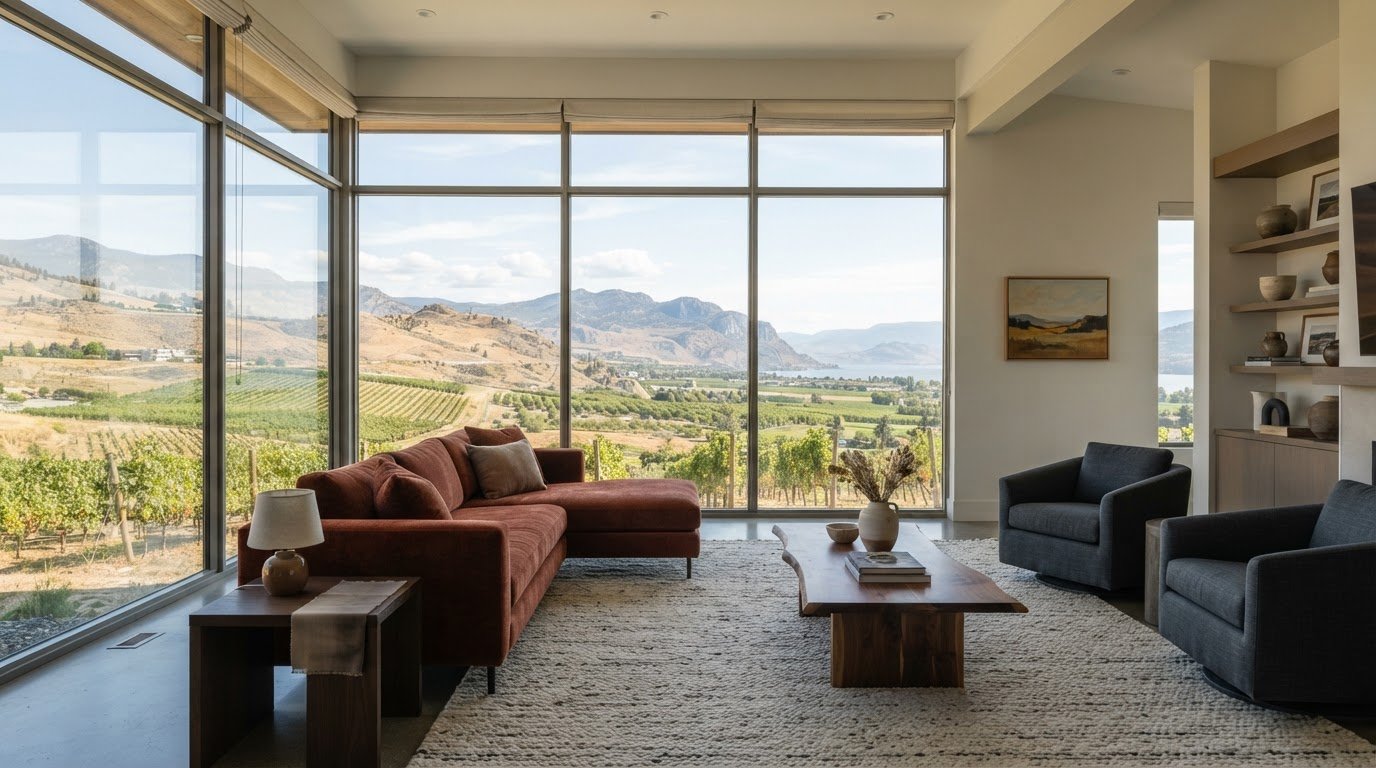
Maintaining your view is often the top priority for lakeside properties in Kelowna or Penticton. One-way films work based on light balance, providing privacy as long as the exterior light is brighter than the interior. For those who want to preserve the natural colour of the landscape, non-reflective solar films are the best choice because they don't alter the appearance of the sky or water. For areas where total seclusion is needed, such as bathrooms or entryways, frosted or textured films offer an elegant alternative to bulky blinds. These decorative options are frequently used to enhance custom glass shower enclosures, providing a high-end finish that balances light and privacy. If you're unsure which technology fits your space, you can request a professional assessment to find the perfect balance for your home's unique layout.
The Professional Installation Process vs. DIY Challenges
Achieving a flawless result with window film installation requires a controlled environment and a methodical approach that goes far beyond simply sticking a laminate to glass. The process begins with deep glass debridement and surgical cleaning, which is arguably the most critical phase. Technicians use specialized scrapers and solutions to remove microscopic contaminants, mineral deposits, and adhesive residues that are invisible to the naked eye but would cause unsightly bumps under the film. Once the surface is pristine, the film is precision-cut to the window's dimensions. For curved or large architectural glass, installers use a "shrinking" technique with heat guns to ensure the material contours perfectly to the glass without tension. The application itself involves specialized mounting solutions that allow for repositioning before a series of final squeegee passes creates a permanent, airtight bond. The process concludes with meticulous edge trimming to ensure the film sits perfectly within the frame, preventing future peeling or lifting.
Why DIY Often Fails in the Okanagan Climate
Many homeowners attempt a DIY approach only to find that the Okanagan's environment is particularly unforgiving. The "dust factor" is a significant hurdle; during our dry summer months, even a slight breeze can carry enough fine silt and pollen to ruin an open-air installation. Once a speck of dust is trapped behind the adhesive, it cannot be removed without discarding the entire sheet. Handling large architectural glass panels alone is also physically demanding and often leads to "fingers," which are long bubbles that form at the edges when the film is not properly shrunk or aligned. These imperfections don't just look unprofessional; they compromise the film's ability to reject heat and can lead to premature failure of the material.
The Professional Advantage: Warranty and Glass Safety
One of the most overlooked risks of DIY work is thermal shock breakage. Applying a high-absorption solar film to a modern double-pane sealed unit can cause the glass to heat unevenly, creating internal stresses that lead to sudden cracks. Professional installers understand the thermal expansion coefficients of different glass types and select films that are safe for your specific windows. Furthermore, most reputable manufacturers only honour their product warranties if the material is applied by a certified professional. This ensures that if the film ever bubbles, fades, or peels, your investment is protected. Professional installers use BTU meters to verify heat rejection before the job is finished. This data-driven approach provides peace of mind that your home is actually achieving the energy efficiency gains promised by the technology.

When to Combine Film Installation with Sealed Unit Replacement
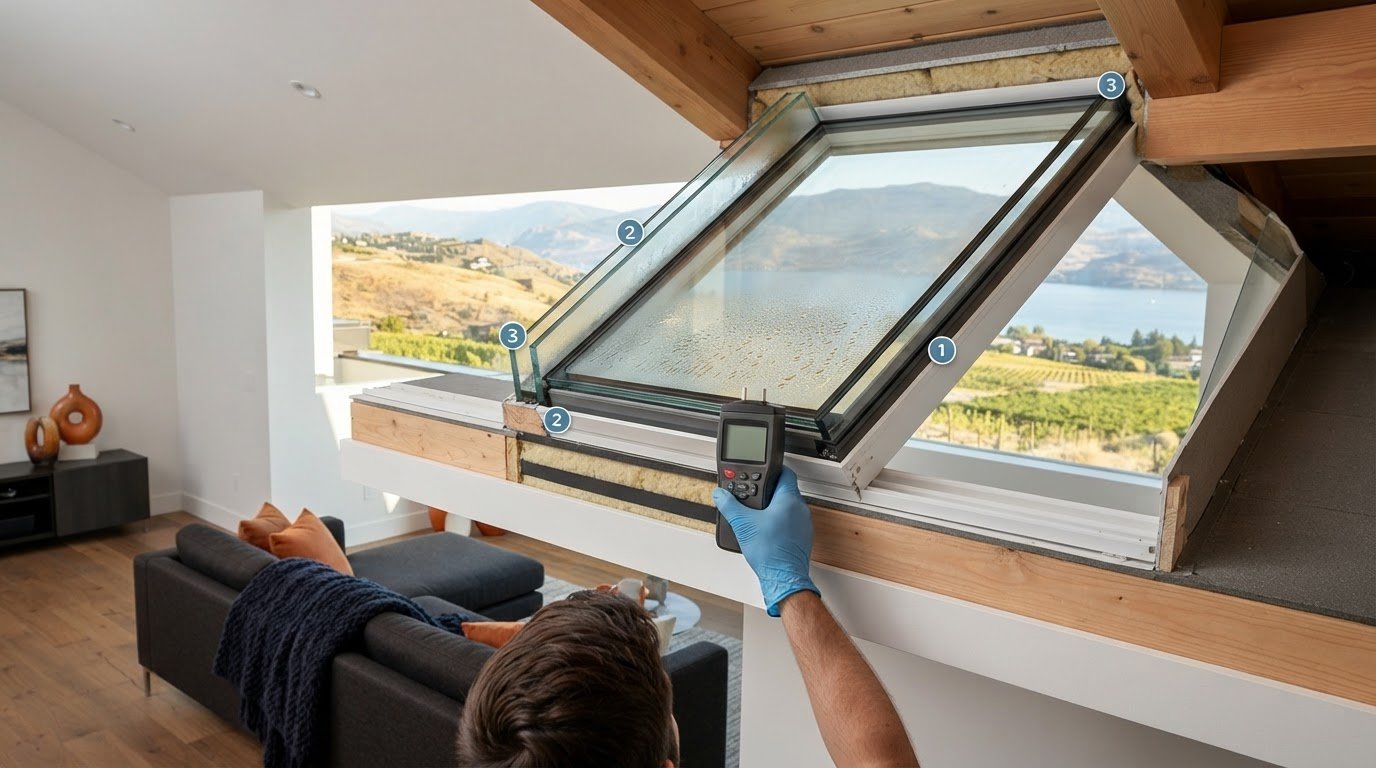
A successful window film installation depends entirely on the structural integrity of the glass it is applied to. If your windows are showing signs of age or failure, applying a high-performance film may be a secondary step to a more fundamental fix. Many Okanagan homeowners struggle with "blown" windows, where the factory seal has failed, allowing moisture to penetrate the space between the panes. Attempting to film a window in this condition is a waste of money; the film is applied to the interior surface, while the unsightly fog and mineral deposits are trapped deep inside the unit. By identifying these failures early, you can choose a comprehensive solution that restores both the clarity and the efficiency of your home's envelope.
The Sunnyside Glass Solutions Ltd. advantage lies in our ability to assess the health of your glazing before the filming process begins. If a unit has failed, we recommend a sealed window unit replacement rather than a full frame replacement. This approach is significantly more cost-effective because it preserves your existing frames while providing you with brand-new, high-clarity glass. Once the new unit is in place, it provides the perfect canvas for a professional film application, ensuring that your investment in solar or security protection isn't undermined by a pre-existing structural failure.
The "Foggy Window" Checklist
Homeowners often mistake seal failure for simple exterior dirt or interior smudges. If you want to determine if your glass is a candidate for replacement before filming, look for these specific symptoms:
Persistent Fogging: Condensation that appears inside the glass and doesn't disappear with changes in humidity.
Mineral Deposits: White, chalky staining between the panes caused by evaporated moisture.
Distorted Views: A "rainbow" effect or oily sheen visible when the sun hits the glass at a specific angle.
Drafts and Temperature Spikes: Feeling a distinct chill or heat gain that suggests the insulating gas has escaped.
When moisture enters the unit, the insulating properties of the window are severely compromised. You should always prioritize glass replacement before film application to ensure the thermal performance of the window is fully restored.
Upgrading Your New Glass with Security Film
Replacing a sealed unit offers a unique opportunity to upgrade your home's defences. By adding security film to a newly installed unit, you create a high-performance, shatter-resistant barrier that standard glass simply cannot match. This combination is particularly effective for large patio doors or ground-floor windows that are vulnerable to both solar heat and potential intruders. In cases of sudden breakage, our emergency board-up services provide immediate security while we prepare the new glass and film for a permanent fix. This integrated approach ensures that your home remains protected, efficient, and visually stunning without the need for redundant or poorly timed repairs. If you suspect your windows are failing, you can book an inspection to determine the best path forward for your property.
Maximizing Efficiency: Local Okanagan Considerations and Maintenance
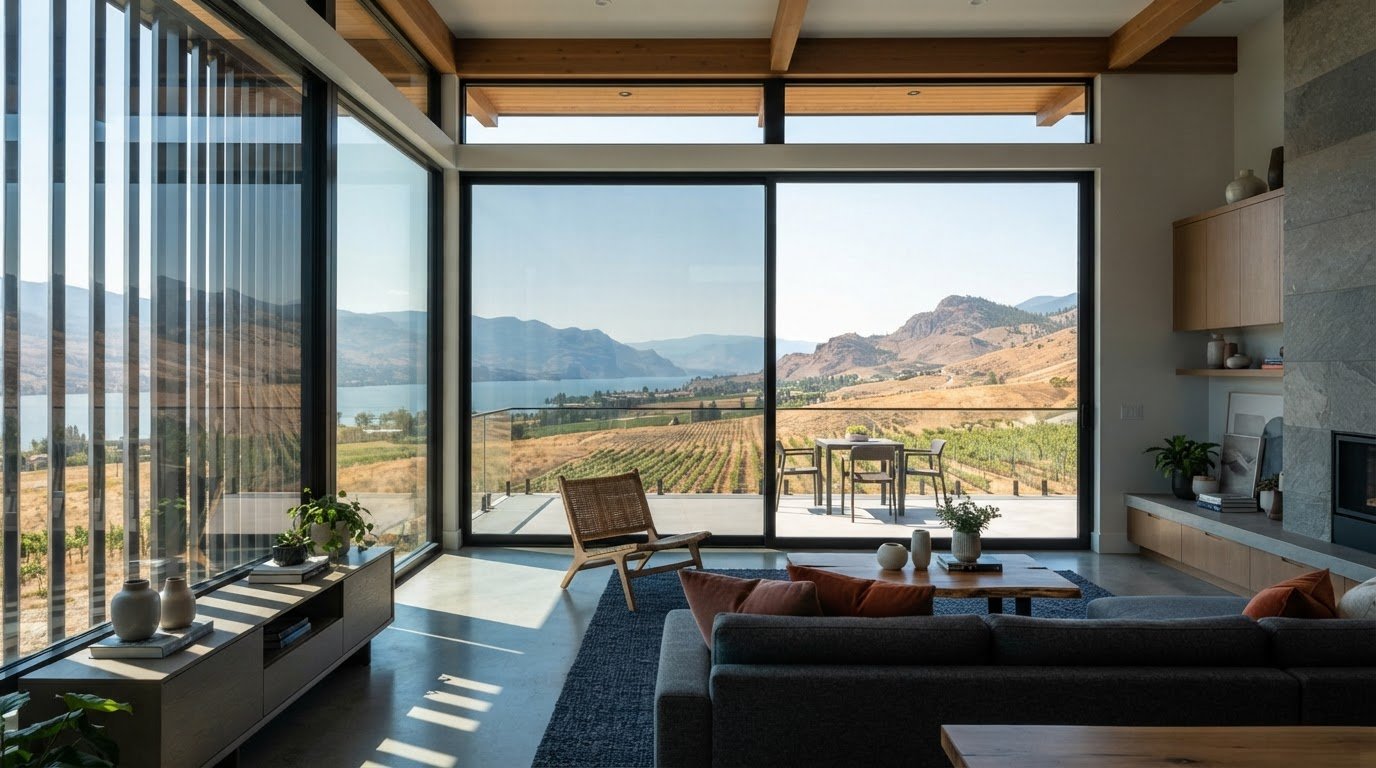
The unique geography of the Okanagan Valley creates a specific set of challenges for residential glazing. Homes in Kelowna, Summerland, and Penticton often feature large south and west-facing windows designed to capture lake views, but these same orientations invite the most intense solar radiation. A professional window film installation is particularly effective here because it addresses the specific solar load of our region. When correctly matched to your glass type, high-performance film offers a lifespan of 15 to 20 years or more in the Canadian climate. Selecting a local installer like Sunnyside Glass Solutions Ltd., with over 25 years of experience, ensures that the material chosen can withstand our local temperature swings without failing or losing its clarity.
Okanagan Climate: Preparing for 40-Degree Summers
During our peak summer months, temperatures frequently climb toward 40°C. In urban areas like Kelowna, the heat island effect can cause temperatures near paved surfaces and building envelopes to feel even higher. While heavy drapes or blinds are a common response to this heat, they often block the very views that define Okanagan living. Solar film is a superior investment because it rejects up to 79% of solar heat gain while keeping your windows transparent. While CleanBC and FortisBC rebate programs currently focus on full window replacement rather than film, the immediate return on investment for film is seen through significantly lower cooling costs. This makes it a practical alternative for homeowners who have functional frames but need better thermal performance.
Long-Term Care for Your Window Film
Maintaining your filmed windows is simple, yet it requires a departure from traditional cleaning habits. The most important rule is to avoid any cleaning products containing ammonia, as this chemical can eventually degrade the film's adhesive and scratch-resistant coating. Instead, use a mild solution of dish soap and water or a designated film-safe cleaner. You must also adhere to the following care protocols:
No Abrasives: Never use scouring pads, stiff bristles, or abrasive paper towels that could create micro-scratches.
Soft Materials Only: Use a clean microfiber cloth or a soft synthetic sponge for all washing and drying.
Avoid Sharp Tools: Never use razor blades or scrapers to remove stickers or debris from the filmed surface.
There is a standard curing period of approximately 30 days after installation. During this time, you may notice a slight haziness or small water bubbles; this is a natural part of the evaporation process and will disappear as the film fully bonds to the glass. Do not clean or even touch the windows during this initial month to ensure the adhesive sets perfectly. Ready to protect your home? Contact Sunnyside Glass Solutions Ltd. for a professional quote and ensure your windows are prepared for the season ahead.
Protect Your Okanagan Home for the Seasons Ahead
Securing your home against the unique environmental pressures of the Okanagan Valley is a long-term investment in both comfort and property value. As we have explored, high-performance films provide an essential barrier against intense solar heat and destructive UV rays while offering a level of security that standard glazing simply cannot provide. By choosing a professional window film installation, you avoid the common pitfalls of DIY attempts and ensure that your glass remains a high-functioning asset for decades to come.
At Sunnyside Glass Solutions Ltd., we bring over 25 years of specialized expertise to every project, serving Kelowna, Penticton, and the surrounding communities with a commitment to meticulous craftsmanship. Whether you are addressing a failing skylight or upgrading an entire lakeside estate, our team provides the technical guidance and precision required for lasting results. Get Your Free Window Film Consultation in the Okanagan and take the first step toward a more efficient, secure, and beautiful living space. We look forward to helping you protect what matters most.
Frequently Asked Questions
Will window film cause my double-pane windows to crack?
Professional window film installation includes a technical assessment to ensure the film is compatible with your specific double-pane glass. While thermal stress can cause cracks if an improper high-absorption film is applied to certain units, our experts select materials that safely manage heat without compromising the structural integrity of your windows. This specialized selection process is essential for preventing the glass breakage risks often associated with DIY projects.
How long does professional window film installation take for an average home?
An average residential project typically takes one full day to complete. This timeline includes the deep debridement cleaning and precision trimming required for a flawless, bubble-free finish. Larger homes with numerous architectural panels or skylights may require additional time to ensure each unit meets our professional standards. We work methodically to ensure the installation is durable and visually perfect without rushing the process.
Can I install window film on my skylights to stop the heat?
Solar film is an excellent solution for reducing the intense overhead heat that skylights often trap in Okanagan homes. By reflecting infrared radiation, the film makes these areas much more comfortable during the peak of summer while protecting your flooring from UV damage. If your skylight is already foggy or showing signs of seal failure, we can also perform a sealed skylight unit replacement before applying the film.
Does window film provide privacy at night when the lights are on?
Standard solar films do not provide privacy at night if your interior lights are brighter than the exterior environment. Because privacy is based on light balance, "one-way" films only work during the day when the sun is brighter than your indoor lighting. For permanent evening privacy in areas like bathrooms and entryways, we recommend using frosted or textured films that block views regardless of the light levels.
Is it better to replace the whole window or just the glass and add film?
If your window frames are in good condition, replacing the glass and adding film is usually the superior choice. This approach provides the thermal benefits of a brand-new window without the high cost and disruption of a full frame replacement. It's a practical way to modernize your home's efficiency and security while preserving your existing architecture and saving on your total renovation budget.
How do I clean my windows after the film has been installed?
You should clean your filmed windows using a soft microfiber cloth and a mild, ammonia-free soap solution. Avoid using abrasive pads, stiff brushes, or harsh chemicals that could scratch the film's protective coating. It's important to wait at least 30 days after your window film installation to allow the adhesive to cure completely before performing your first cleaning.
What is the difference between security film and standard window tint?
Security film is significantly thicker than standard tint and is designed for physical protection rather than just aesthetics. While standard tint manages heat and light, security films range from 8-mil to 14-mil in thickness. Their primary purpose is to hold shattered glass in place during an impact, acting as a powerful deterrent against forced entry and accidental breakage.
Does window film interfere with my cell phone signal or Wi-Fi?
Modern high-performance films, particularly ceramic and non-reflective options, do not interfere with your electronic signals. While some older metallic films were known to cause minor issues, contemporary materials are engineered to be signal-neutral. This ensures you can enjoy heat rejection and UV protection without compromising your Wi-Fi or cell phone connectivity throughout your home.
Comments