
Choosing Window Film for Your Home Based on Heat, Light and Fit

One-way window film doesn’t provide privacy in every lighting condition. It reflects light from the brighter side, limiting views into your home during the day while still letting you see out. After dark, interior lighting can reverse that effect. Choosing the right window film for your home means weighing privacy alongside heat, glare and how much natural light you want to keep.
A good solution should improve comfort without making rooms feel closed in or disrupting everyday needs. The right fit depends on more than how dark the film looks: the glass, building type and your priorities all matter.
This guide explains how one-way film works and what to consider when comparing heat reduction, electronic signal compatibility, glass type and building use. It also explains visible light transmission, or VLT, so you can understand how a film’s light level affects the feel of a room and make a more informed choice.
Table of Contents
What is one-way window film?
One-way window film has a mirrored exterior that can limit views inside during the day. Choosing a film means balancing privacy, UV protection, heat, appearance and application method.
Daytime Privacy and Mirrored Appearance
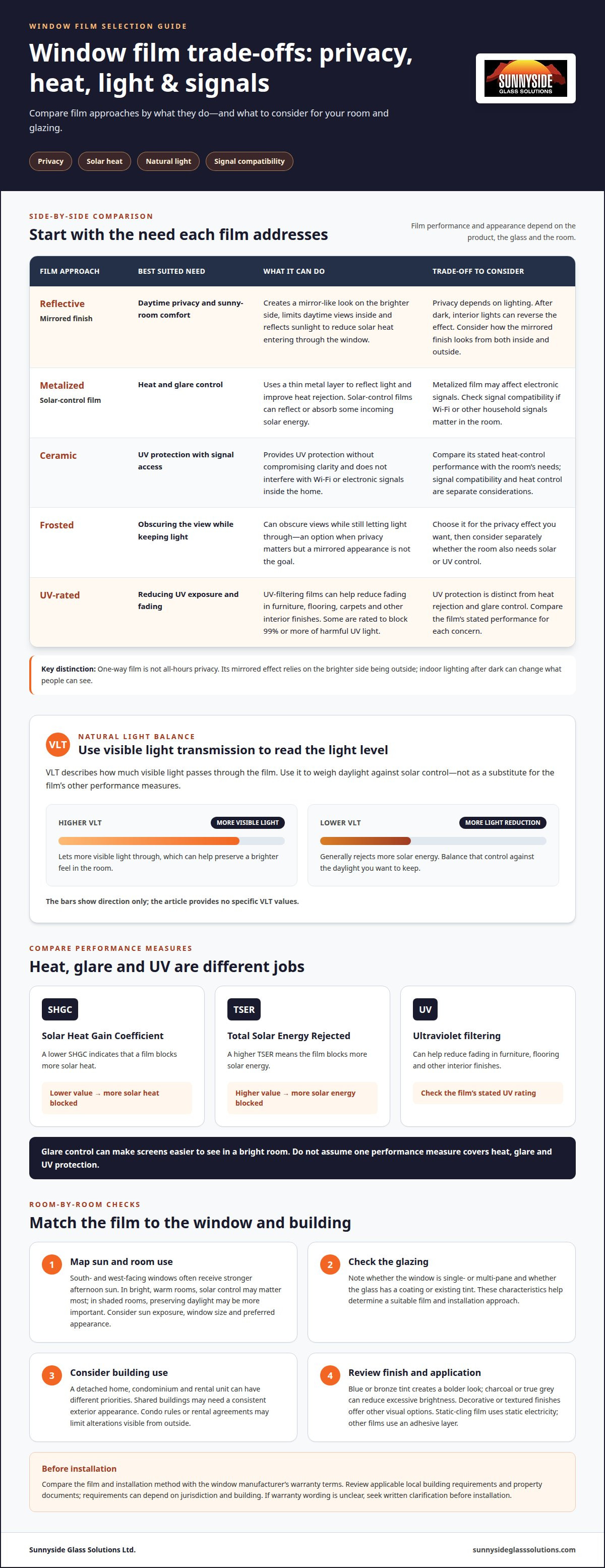
Reflective film creates a mirror-like appearance on the brighter side of the glass, while allowing people inside to see out. It can suit a living room window facing a public walkway, where daytime privacy matters but natural light is still welcome. The effect depends on lighting, so it won’t provide the same privacy after dark when interior lights are on.
Heat Reduction from Mirrored Film
Mirrored film reflects sunlight, which can reduce solar heat entering through a window and ease discomfort in a warm room. It may help where glare and heat affect daytime comfort. The reflective appearance is part of the trade-off, so consider how the film will look from both inside and outside.
Start with the room’s main need. For daytime privacy, reflective film may suit a street-facing bedroom; frosted film can obscure the view while still letting light through. For interior protection, choose a film with UV protection to help reduce fading of furniture and carpets. Sun exposure, window size and preferred appearance all affect the right choice.
Application matters, too. Static-cling film adheres through static electricity rather than adhesive, while other films use an adhesive layer. Compare the film’s intended use and application method with your budget and window dimensions. To choose the right window film for my home, first identify which windows need privacy, UV protection or improved comfort. Then match those priorities to each room and its glazing.
To assess warranty compatibility, read the window manufacturer’s warranty terms for restrictions on film or applied treatments, then compare them with the specific film and installation method. If the wording is unclear, seek written clarification before installation.
Heat reduction and electronic signal compatibility
Solar-control films manage heat, glare and ultraviolet exposure in different ways. For a sunny room, compare the film’s heat rejection with its effect on daylight and household signals.
Solar Heat Control
Solar-control film reduces heat by reflecting or absorbing some incoming solar energy, which can improve comfort in summer. Metalized films use a thin metal layer to reflect light and improve heat rejection. A lower Solar Heat Gain Coefficient (SHGC) indicates that a film blocks more solar heat, while a higher Total Solar Energy Rejected (TSER) means it blocks more solar energy.
South- and west-facing windows often receive stronger afternoon sun, making them practical candidates for heat and glare control. Compare the room’s exposure and the film’s performance measures instead of judging by darkness alone.
Protecting Furniture and Plants
Window films that filter UV rays can help reduce fading in furniture, flooring and other interior finishes. Some films are rated to block 99% or more of harmful UV light, which can help protect items near sunlit windows.
UV reduction also matters for plants beside bright glass, although their light needs vary. Consider where furnishings and plants are positioned before selecting a film, since reducing glare and UV exposure can change the light reaching the interior.
Glare control can make screens easier to see in a bright room, while UV filtering helps protect carpets and furniture from fading. These benefits are separate from heat rejection, so compare the film’s stated performance rather than assuming one measure covers every need.
Electronic compatibility is another factor. Ceramic window films provide UV protection without compromising clarity and don’t interfere with Wi-Fi or electronic signals inside the home. If signal access matters, ceramic film is an option to consider alongside the room’s heat-control needs.
For rooms with strong sun, a solar film installation can address heat and glare while preserving the comfort and function of the space.
How building type and glass characteristics affect film selection
The right film depends on the window as well as the room’s purpose. Building use, glass characteristics, local climate and appearance all shape the choice.
A detached home, condominium and rental unit can have different priorities. A street-facing home may favour a subtle mirror finish, while a shared building may need a consistent exterior appearance. Some film types work in homes and businesses, but function should guide selection. Consider privacy, light, heat and the appearance of nearby windows together.
Glass characteristics matter because film is applied directly to the glazing. Note whether a window is single- or multi-pane, and whether its surface has a coating or existing tint. These details help determine a suitable film type and installation approach. Compare ratings for the performance that matters in the room, rather than relying on colour alone.
Climate and exposure help set priorities. In a home with bright, warm afternoon rooms, solar control may matter most; in a shaded room, preserving daylight may be more important. Canadian seasonal changes make it useful to consider comfort throughout the year, not only in summer. Window direction and surrounding shade affect how much sun reaches the glass.
Colour and finish can complement a room or change its exterior appearance. Blue or bronze tint creates a bolder look, while charcoal or true grey can reduce excessive brightness. Decorative films offer another visual option, and textured finishes can diffuse light. Compare a sample with wall colour, flooring and furniture before settling on a finish.
In Canada, applicable building requirements can depend on the jurisdiction and building. Condo rules or rental agreements may also limit alterations or changes visible from outside, so review the relevant property documents and local requirements before installation.
Visible Light Transmission (VLT) and natural light
VLT describes the proportion of visible light that passes through window film into indoor spaces. Lower VLT can reduce daylight, and film compatibility with the glass matters when considering thermal-stress risk.
Visible Light and Shade
Film shade affects how much natural light enters, so VLT helps compare options beyond their colour or appearance. A film with a VLT of 70% or above lets in most natural light while still blocking heat and UV rays.
For a bright kitchen where daylight is valued, a higher-VLT solar-control film may be a better fit than a darker shade. In a room with strong glare, lower VLT can reduce incoming light, but may also make the space feel dimmer.
Diffusing Light with Textured Film
Textured film scatters incoming light, softening its direction while helping obscure the view. It can suit a bathroom or entryway where privacy and a more even indoor glow matter.
Unlike a dark tint, a textured or decorative finish can diffuse light without relying only on reduced VLT. Consider how the pattern affects the room’s appearance and view through the glass before choosing a finish.
One-way film reflects light from the brighter side of the window. During the day, stronger exterior light can create a reflective surface that makes it harder to see inside. The effect changes when indoor lighting becomes brighter after dark.
Lower VLT isn’t automatically the best choice for every space. Compare the film’s VLT with the room’s daylight needs, glare and solar-control priorities. Viewing a sample beside flooring, wall colour and furniture can show how its shade affects the room’s appearance.
Thermal stress is a potential consideration because film changes how the glazing handles solar energy. Glass type, existing glazing and the selected film all matter, so assess suitability as a system rather than by VLT alone.
For a tailored fit, arrange window film installation suited to your glass and daylight priorities.
Sunnyside Glass Solutions
Sunnyside Glass Solutions Ltd. helps homeowners match window film to their priorities, glazing and how each room is used. For glare, solar heat or privacy concerns, the company installs window film tailored to the space. If the sealed window unit itself needs attention, replacement may be more appropriate than applying film.
Bring together the key details: which windows affect your daily routine, how much daylight you want to retain, and whether privacy or heat control matters most. These factors help shape a practical recommendation for the glass and space, rather than treating every window the same.
For guidance on your home’s windows and film options, contact Sunnyside Glass Solutions Ltd.
Make a Confident Choice for Your Home
Choosing the right window film for my home comes down to deciding how you want each room to feel and what you need the glass to do. First, identify the windows that most affect your daily routine, then set a clear priority for each: privacy, comfort or protection for the interior. That gives the selection process a practical starting point instead of leaving the decision to appearance alone.
Next, match those priorities to the actual windows in your home. A conversation about the glass, the room and your preferred finish can turn general preferences into a considered plan. If a window needs replacement rather than film, that distinction can guide the next step.
Contact Sunnyside Glass Solutions to discuss your home’s window film needs and take the next step with confidence.
Frequently Asked Questions
How Do You Match Film Type to Your Specific Needs?
Start by identifying the main issue in each room, such as screen glare in a home office or a lack of privacy beside a walkway. Then consider secondary needs, including UV filtering, appearance and daylight. One film may not suit every window, so grouping windows by exposure and purpose helps clarify where different choices make sense.
How do I know which VLT level is right for my property?
Choose a VLT level based on how you use each space and how much daylight it needs. A kitchen used throughout the day may benefit from a brighter appearance, while a media room may suit less incoming light. View a film sample against the actual window and room finishes, since outdoor brightness and indoor lighting can change how the shade looks.
What Are the Key Performance Factors to Compare?
Compare heat control, visible light, UV filtering and signal compatibility as separate performance factors. SHGC indicates how much solar heat a film blocks, while TSER describes the share of solar energy it rejects. Also consider the glass type and room purpose. For example, a room with a television may need glare control without compromising electronic signals.
What Are the Main Types of Window Tint Films Available?
Common categories include solar-control, reflective, ceramic, metalized, privacy, decorative and security films. Their functions differ: some manage sunlight, while others obscure views or add a decorative finish. Ceramic film is an option where electronic signal compatibility matters. Security film helps hold glass together during impact or intrusion, rather than serving as a privacy or heat-control product.
What types of window film are available for homes in Canada?
Canadian homeowners can choose from solar-control films, privacy options such as reflective or frosted finishes, decorative films and security films. The right category depends on the window’s function, glass characteristics and household priorities. In Penticton, Kelowna, Summerland, Peachland, West Kelowna and Vancouver, room exposure and preferred appearance can guide the selection.
How do solar control, UV-blocking, privacy, decorative, and safety window films compare?
Solar-control film targets heat and glare, while UV-blocking film helps limit ultraviolet exposure to interior furnishings. Privacy film reduces visibility through glass, and decorative film adds pattern or texture. Security film is designed to help hold glass together if it breaks. These functions can overlap, but choosing for the room’s main need makes trade-offs easier to assess.
Comments