
Decorative window film for front door Penticton

A front door can feel more private and polished without blocking all the natural light. Decorative window film for a front door in Penticton can add a frosted, etched, custom or reflective finish, with options that also help manage glare and UV exposure. The right look depends on how much privacy and light you want through the glass.
It’s understandable to want a front entry that feels welcoming from inside while limiting clear views from outside. Frosted and etched patterns soften the view, while custom designs add a distinctive detail. Reflective finishes offer daytime privacy, although their effect changes with lighting conditions.
This guide explains how these finishes differ, what to consider when choosing a design, and how film can affect privacy, sunlight and glare. You’ll also learn what installation involves and when professional window film installation can help create a neat finish for your entry.
Table of Contents
Custom decorative designs
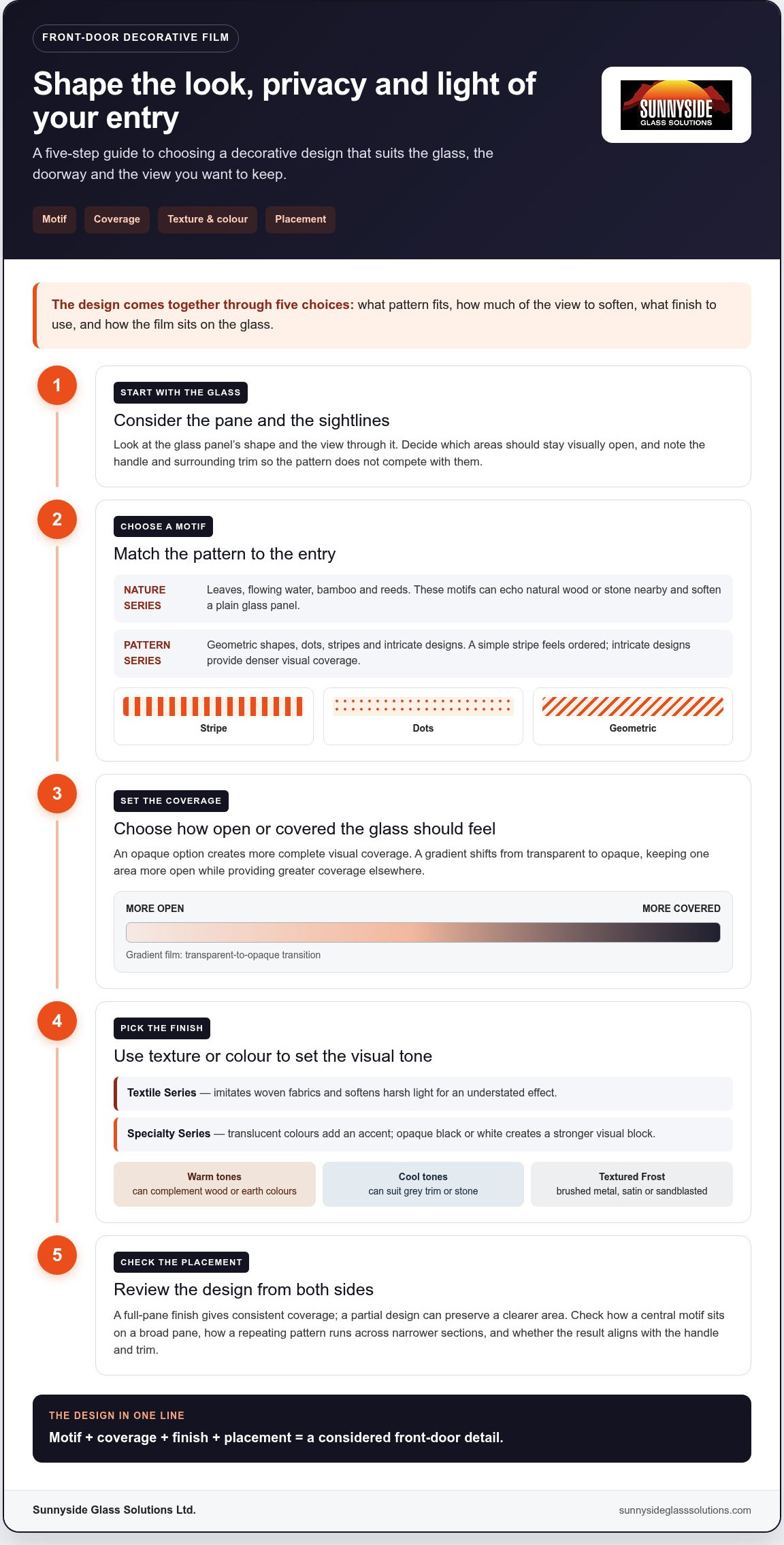
Custom decorative film lets a front door’s glass carry a pattern, texture or colour that suits the entry. Nature Series designs draw on leaves, flowing water, bamboo and reeds. These motifs can soften a plain glass panel without making the doorway feel visually busy. For a Penticton home with natural wood or stone nearby, a leaf or reed pattern can echo those materials. A flowing-water motif offers a different effect, with curved lines rather than botanical shapes.
Pattern Series films offer another direction, with geometric shapes, dots, stripes and intricate designs. A simple stripe can create a more ordered look, while dots add a repeated detail across the pane. Intricate designs provide denser visual coverage. Consider the door’s glass shape and the view through it before settling on a pattern. A large central motif may suit a broad pane; a repeating design can work across narrower sections. The pattern should fit the glass without competing with the door hardware.
Other film categories change a design’s feel through texture or colour. Textile Series films imitate woven fabrics and soften harsh light, making them an option for a softer, understated effect. Specialty Series films include translucent colours and opaque black or white options. A translucent colour can introduce a restrained accent, while black or white creates a stronger visual block. Gradient Series films shift from transparent to opaque, combining an open view through one area with greater coverage elsewhere.
Choose a motif: compare leaves, reeds, stripes, dots and geometric forms against the door’s existing details.
Decide on coverage: a gradient changes opacity across the glass; an opaque option creates more complete visual coverage.
Set the visual tone: textile-like texture reads softly, while colour or high-contrast patterns stand out.
Before choosing, look at the door from both sides and consider the glass panel’s outline. A pattern that looks balanced indoors may align differently with the exterior handle or surrounding trim. Think about which areas should remain visually open, especially if you want to retain a clear sightline near the centre. With a gradient, the transparent-to-opaque transition can place the more covered portion where it suits the entry. With repeating motifs, the pattern’s direction affects how it appears across the pane.
Custom design combines motif, opacity, texture, colour and placement. Nature Series and Pattern Series provide distinct starting points, while Textile, Specialty and Gradient Series offer further ways to shape the finish. Matching those choices to the door’s glass and the home’s style helps create a considered entry detail rather than a pattern chosen in isolation.
Frosted and etched-pattern finishes
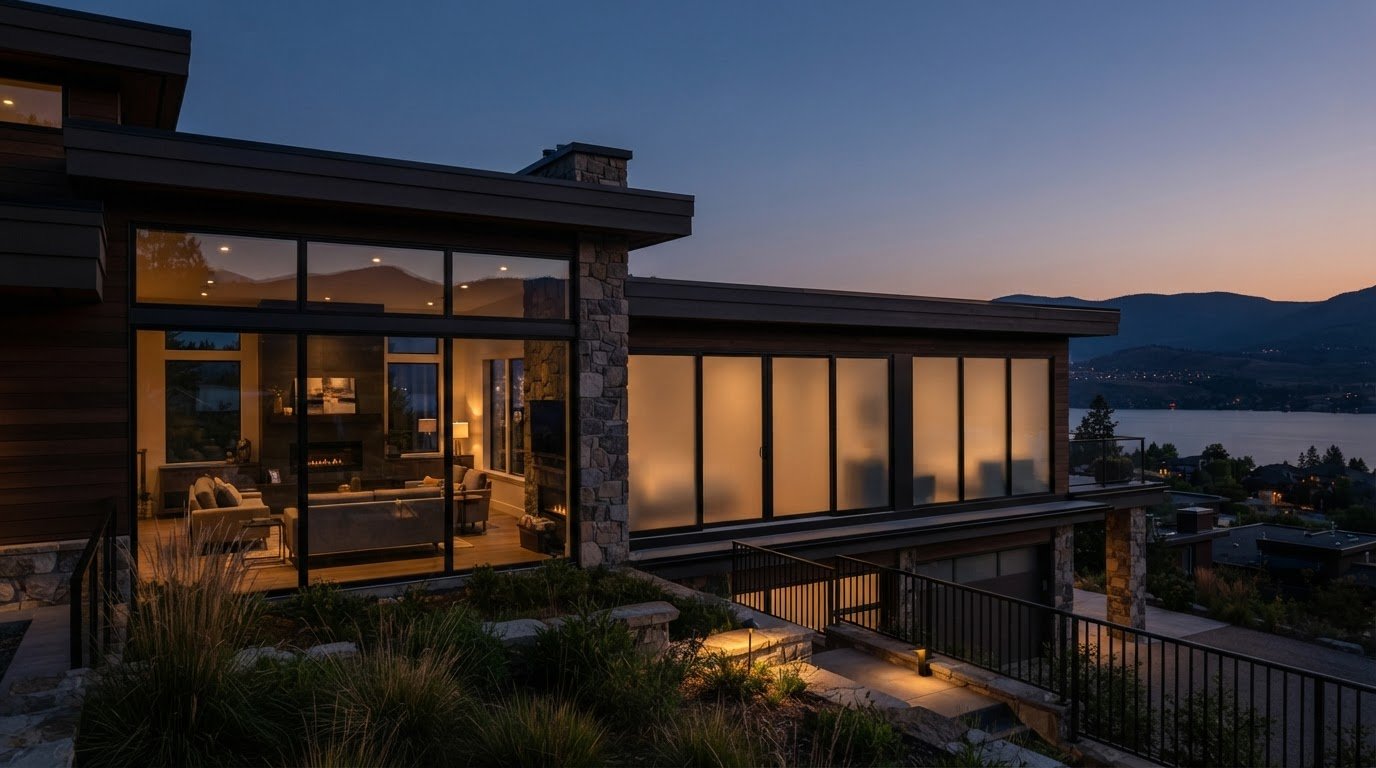
Frosted and etched-pattern films soften the view through a front door while allowing light to pass. Matte Frost films diffuse light and come in varying degrees of opacity. A lighter finish can obscure fewer details, while a more opaque choice provides greater visual coverage. This range lets you balance privacy needs with the brightness you want to retain in the entry. For example, a bright foyer may suit a less opaque frost, while a door facing a nearby walkway may call for more coverage.
Colour Frost films add colour to the frosted appearance, with warm and cool tones available. Warm tones can complement wood finishes or earth-coloured entry details. Cool tones can suit grey trim, stone or a more restrained palette. Consider colour as part of the overall door design: look at the surrounding materials and how the finish appears from indoors and outdoors. A subtle tint creates a different effect from a more noticeable colour, even when both soften visibility through the glass.
Textured Frost films imitate the appearance of textured glass, with options that include brushed metal, satin and sandblasted finishes. Brushed metal introduces a more defined surface character, while satin has a smoother, muted look. Sandblasted texture suggests glass treated for a diffuse finish. These choices create visual interest without relying on a prominent printed motif. Compare the texture with the door hardware and nearby trim so the finish feels intentional.
For a simple, light-diffusing look: compare matte frost opacity levels against the privacy you want.
For a colour accent: consider warm or cool Colour Frost tones alongside the entry’s existing palette.
For surface character: compare brushed metal, satin and sandblasted Textured Frost appearances.
Before choosing, identify where you want the view softened. A full-pane finish gives consistent coverage across the glass. A design limited to part of the pane can preserve a clearer area while adding a frosted detail elsewhere. The decision depends on the door’s layout and the sightlines you want to keep, such as a view from the foyer toward the porch. Compare the design from both sides, since the door is seen indoors and outdoors.
Frosted and etched looks are visual finishes, not a substitute for deciding how much visibility suits your entry. A matte finish controls opacity; colour affects the overall tone; texture changes the surface impression. For a balanced selection, compare these qualities separately, then consider how they work together on the front door. For instance, a satin-style texture with restrained coverage creates a different result from coloured frost across the whole pane.
Reflective film and daytime privacy
Reflective film can make a front door harder to see through during daylight, when outdoor light is brighter than indoor light. Its reflective appearance is most effective on the brighter side of the glass. For a Penticton entry facing a sunlit walkway, it may reduce clear views inside during the day. The result depends on the difference in lighting between both sides, not simply on the film’s appearance.
That lighting relationship can change. At dusk or after dark, indoor lights may make the foyer brighter than the exterior. The reflective effect can then reverse, allowing people outside to see more clearly inside. Treat reflective film as a daytime privacy measure, not a permanent one-way screen. Closing curtains or blinds after dark adds a separate privacy layer when the entrance is illuminated.
Before selecting a finish, consider what the glass faces and when privacy matters most. A front door beside a bright, open yard has different sightlines from one near a shaded porch or neighbouring windows. Check the view from the public approach and from inside the foyer. Notice whether passers-by can see the entry directly or only at an angle. These observations help identify which parts of the glass need coverage.
Review daytime conditions: compare exterior brightness with the light inside the foyer.
Consider evening use: plan a separate covering for times when indoor lights are on.
Check sightlines: view the door from the walkway, porch and interior.
Reflective film also changes the door’s exterior appearance. Its sheen may stand out against matte trim, while a subtler reflective look may blend more easily with other glass nearby. Compare the finish with the door colour, hardware and surrounding façade. Consider the view from both sides, since the reflective surface can look different indoors and outdoors. A sample viewed in daylight can help you assess the contrast in your actual entry.
Think through daily routines before deciding. If you often switch on the foyer light while it’s still bright outside, the exterior may remain brighter and the film’s daytime effect can continue. Once the sun goes down, the balance shifts. Decide whether you need privacy during daylight, after dark or at both times. Reflective film suits a daytime goal; a separate window covering addresses evening visibility.
For the clearest decision, assess the entrance at different times: in bright daylight, at dusk and with the interior light on after dark. Compare each view through the existing glass, then choose based on the hours when privacy matters. This simple check helps set realistic expectations and prevents you from treating reflective film as a substitute for a night-time covering.
UV protection and glare reduction
A front door with clear glass can admit ultraviolet light and bright daylight into the entry. Some brands of UV window film can block 99% of UVA and UVB rays passing through glass. That figure describes some films, not every decorative finish. Compare the stated UV performance of the specific film you’re considering, rather than assuming a patterned or frosted appearance provides the same protection.
UVA and UVB are different parts of ultraviolet radiation, and film performance matters more than colour or pattern alone. A clear-looking product may be designed for UV control, while a decorative finish may be selected mainly for appearance or privacy. For example, a frosted motif on a front door doesn’t by itself show how much UV the film blocks. Treat UV protection as a separate selection criterion.
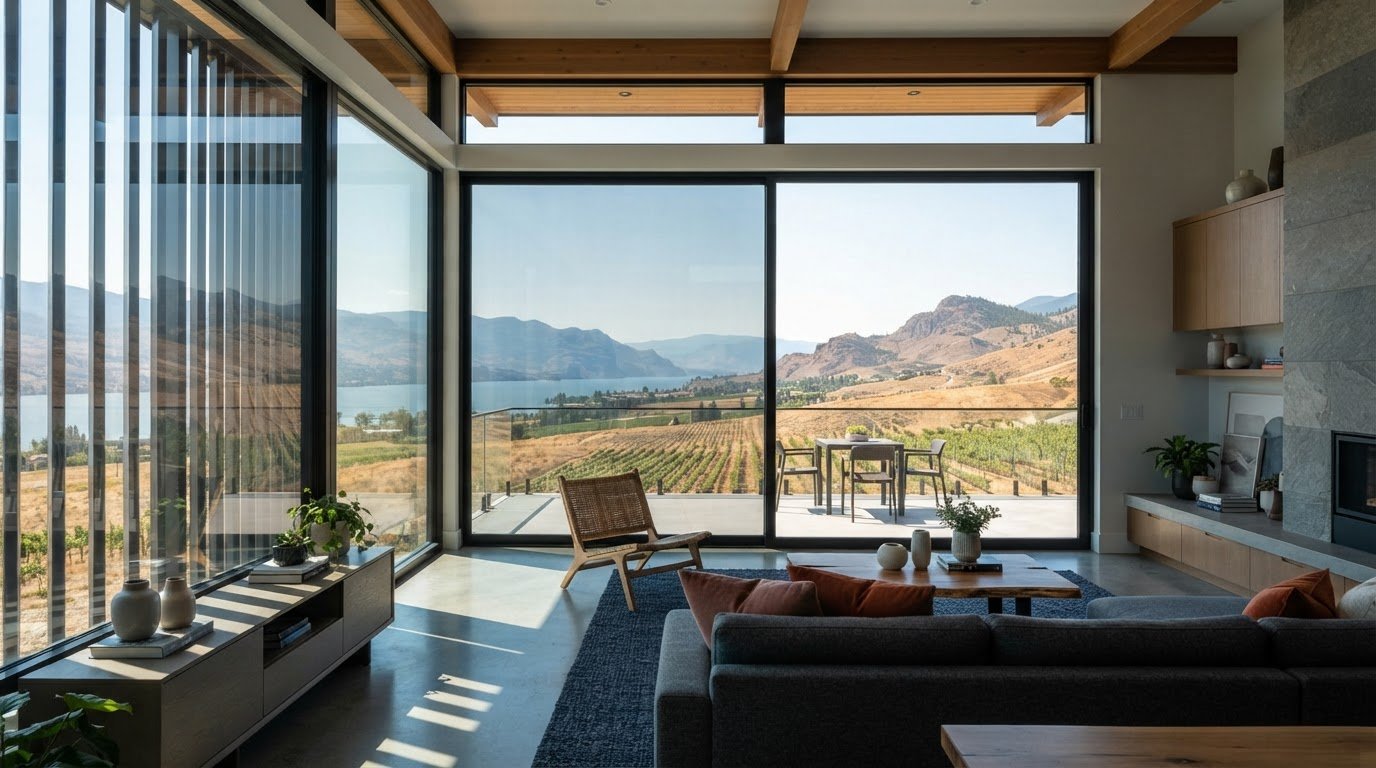
Glare is a different concern. Direct sun on a door’s glass can create bright patches on the floor or make the foyer uncomfortable to look toward. Film can alter how much visible light passes through, helping manage brightness. The effect depends on the film’s optical properties and the direction of sunlight. For example, a south- or west-facing entrance may receive stronger direct light at particular times than a shaded doorway.
Identify the issue: note whether sunlight creates glare, bright floor patches or fading concerns near the door.
Separate the goals: compare UV performance and glare control as distinct features.
Consider the glass position: record when direct sun reaches the entry and which interior surfaces it affects.
Reducing incoming light can also change the entry’s overall brightness. If the foyer is already dim, a strongly light-filtering finish may feel less suitable than a lighter option. If glare is the main concern, consider how sunlight reaches the glass and where it lands indoors. The direction and angle of exposure help explain why the same film can feel different on two front doors.
Use a practical comparison before choosing. First, observe the doorway during the hours when glare is most noticeable. Next, identify whether your priority is UV reduction, softer visible light or both. Then compare film specifications for UV performance and light transmission alongside the appearance you want. These steps help distinguish a decorative effect from a measurable protective feature.
For a Penticton front entry, the useful choice is one that suits the actual exposure and the room behind the glass. A stated 99% UV-blocking capability applies to some brands of UV window film; don’t transfer that value to a different film without matching specifications. Pairing the right stated performance with an appropriate light level can address UV exposure and glare without treating those goals as interchangeable.
Does window film affect front door glass warranties or safety glass?
Window film and the glass beneath it are separate components, so review both when planning a front door upgrade. A glass warranty may address defects in the glass or sealed unit, while film has its own product and installation considerations. The actual warranty wording determines what applies. For example, terms about alterations, surface-applied materials, breakage or film removal may be relevant to your decision.
Start by locating the paperwork for the door or replacement glass. Look for the manufacturer, product description and warranty conditions. If the documents discuss window film or applied coatings, read those clauses closely. Keep the paperwork with any information about the film and its installation. A clear record helps distinguish a glass concern from a film concern if an issue arises later.
Safety glass is a separate consideration. Decorative film changes the glass surface, but shouldn’t be treated as proof that the door contains safety glass or as a replacement for it. Check the glass markings, purchase records or door documentation to identify the installed glass. For example, a surface pattern doesn’t tell you what type of glass is behind it. Film choice and glass type are different questions.
Before installation, note the condition of the glass and frame. Existing chips, cracks or damage around the edges can affect whether film is appropriate. Record any visible issue and describe the door’s construction, such as a single glass panel or multiple sections. This gives the installer useful context and helps distinguish pre-existing concerns from later changes.
Review the warranty: focus on clauses about coatings, alterations, breakage and removal.
Identify the glass: use markings or door records, not the decorative finish, to establish its type.
Document the condition: note cracks, chips, edge damage and the panel layout before work begins.
Film does not repair damaged glass or resolve a failed sealed unit. If the glass is cracked or a sealed unit shows signs of failure, replacement addresses a different problem than surface film. Matching the work to the door’s condition helps avoid treating a glass defect as a privacy or appearance issue.
For a front door in Penticton, review the glass documentation first, then select film based on the door’s condition and your design goals. To discuss a suitable film application for your door, arrange professional window film installation.
Compare decorative options by finish and format, while keeping glass identification separate from appearance. Textured Frost Series films imitate textured glass and include brushed metal, satin and sandblasted finishes.
These product details can help narrow a decorative choice, but they don’t establish the type, condition or warranty status of the door glass. Confirm those points separately before choosing an application.
Sunnyside Glass Solutions: Window Film Installation
Sunnyside Glass Solutions Ltd. provides window film installation for front doors where you want a decorative finish alongside practical benefits. Once you’ve compared frosted, etched, custom or reflective options, the next step is to match the film’s appearance and function to your glass, privacy needs and daylight exposure. Sharing your preferred design and the concerns you want to address helps guide the discussion.
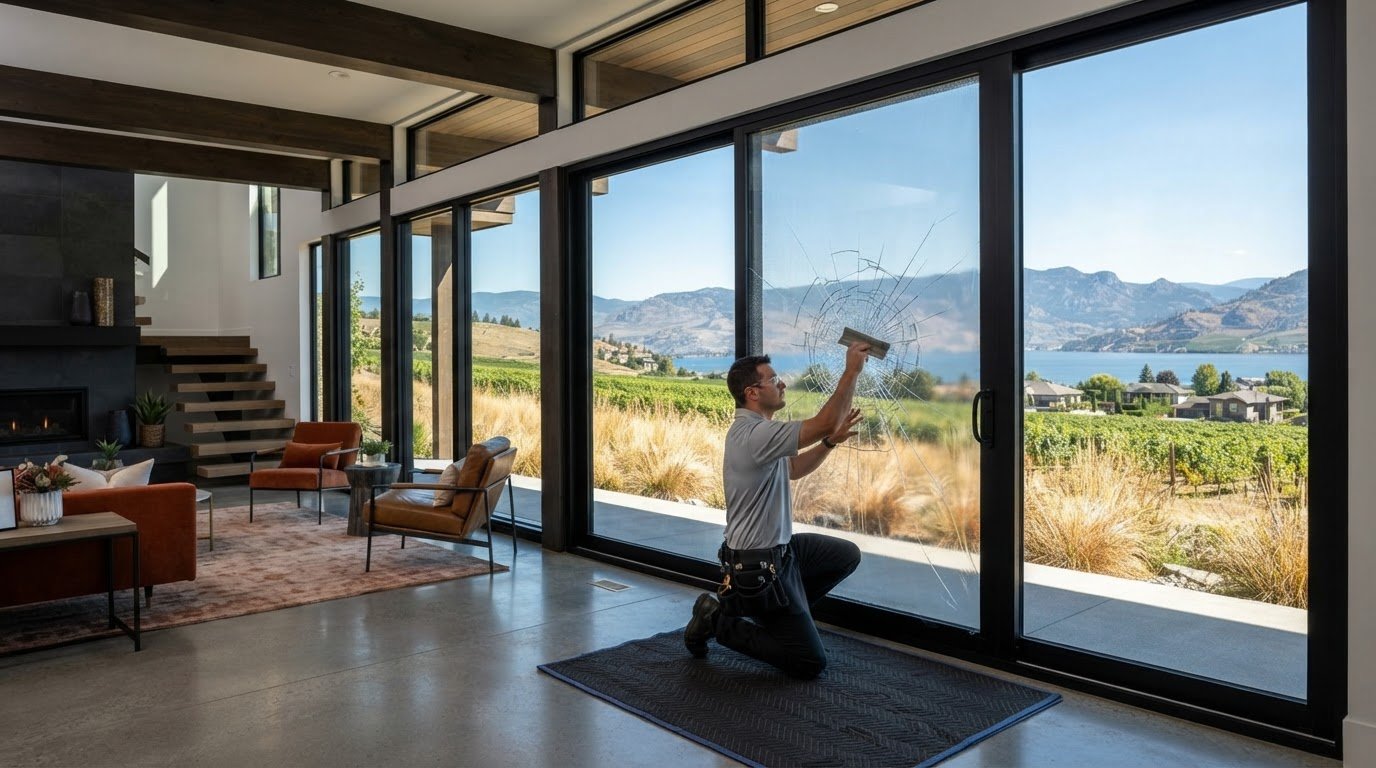
Professional installation is a practical choice when a clean fit matters around door edges, handles or divided glass panels. If the glass itself is damaged or a sealed unit has failed, sealed window unit replacement or full glass replacement addresses a different issue than film. Choosing work that suits the door’s condition keeps the solution focused.
Contact Sunnyside Glass Solutions Ltd. to discuss window film for your front door.
Shape a front entry that feels like yours
The best next step is to turn your preferences into a clear design direction. Decide what you want the front door to communicate, whether that’s a quieter, more private entry or a distinctive detail that complements your home. Then consider how the finish will relate to your door, trim and the view from inside. These choices give your project a practical starting point before installation.
For decorative window film for a front door in Penticton, a focused conversation can help translate your priorities into a suitable approach for the glass. Share the look you’re drawn to and the concerns you want the film to address. Sunnyside Glass Solutions provides Window Film Installation, while Sealed Window Unit Replacement addresses a different glass issue.
Contact Sunnyside Glass Solutions today to discuss your front door project. A considered choice can make the entry feel more connected to the rest of your home.
Frequently Asked Questions
Which Penticton businesses install decorative or privacy window film?
For decorative window film for a front door in Penticton, Sunnyside Glass Solutions Ltd. provides Window Film Installation. The company serves Penticton and other communities, including Kelowna, Summerland, Peachland, West Kelowna and Vancouver. To get started, note whether your priority is privacy, appearance, glare reduction or UV protection. Sharing the door’s glass layout and preferred finish helps focus the discussion on a suitable film application.
How do I measure and install front door window film?
Measure the glass area, not the full door, and record its width and height at several points. Note whether the pane has curved corners, bevelled edges or divided sections, since these affect the film shape. For a DIY application, follow the film maker’s instructions for preparing glass, trimming and applying the film. A door with multiple panes or unusual shapes can be more demanding to fit neatly.
What privacy levels and light transmission do popular decorative films offer?
Privacy and light transmission vary by film, pattern and opacity. A more transparent finish generally keeps the entry brighter but allows clearer views; a more opaque finish obscures more detail and reduces incoming light. Compare the product’s stated visible-light transmission and opacity rather than judging by colour alone. For example, two pale frosted films can look similar while providing different levels of visibility through the glass.
Comments