
How to Prevent Furniture Fading from Sun in Kelowna

Your sunniest window can be the very spot where furniture gradually loses colour. If you’re looking to prevent furniture fading from sun Kelowna homes receive through bright windows, remember that UV rays aren’t the only factor: visible light and solar heat can also contribute. Upholstery, rugs, wood finishes and artwork may fade or develop uneven colour after repeated exposure to direct sunlight.
Moving a sofa or closing the blinds may help, but neither is the only option. This guide explains what contributes to fading and how to reduce direct sun exposure, room by room. You’ll also learn how professionally installed solar window film can provide UV protection without replacing the window unit. Sunnyside Glass Solutions installs window film for residential and commercial properties, drawing on over 25 years of professional window film installation experience.
Table of Contents
Why Kelowna sunlight can fade furniture over time
A bright room can feel inviting, but furnishings beside a window may gradually look different from pieces or surfaces kept in the shade. You might first notice a cushion that looks less vibrant, a rug whose exposed edge contrasts with the area beneath a coffee table, or a finish that looks different where sunlight regularly falls.
Sun-related fading is a gradual change in a material’s appearance after repeated exposure to sunlight. Sunlight is not the only possible cause of changes to colour or finish: indoor lighting, heat, humidity, cleaning and everyday use can also affect furnishings. Sunlight includes ultraviolet (UV) and visible light, and ultraviolet radiation can trigger chemical changes in some materials. The result varies with the item, its finish and its exposure.
Fabric, leather, wood finishes, artwork and rugs may respond differently to prolonged light exposure. Even similar items can change at different rates because their dyes, coatings, colours and positions in the room differ. Look at where changes appear before deciding how to prevent furniture fading from sun Kelowna homes experience through their windows. Not every room or window has the same exposure.
Which furniture and finishes may show fading first?
No single material always changes first. A shift may be easier to spot on a bold or dark colour, while a pale or patterned surface can make gradual changes less obvious. Compare a window-facing area with a section usually covered by cushions, a throw, a rug or another object. Check the finish as well as the colour: a change in sheen may be noticeable even when the colour difference is subtle.
How to spot uneven sun exposure in a Kelowna room
Look for differences between areas of upholstery or rugs exposed to the window and sections that are normally sheltered. Note which window is nearby and which side or surface shows a change. Observe when direct sunlight reaches each window. The pattern can vary by room and shift with the season, nearby shade or your home’s layout.
Record which room and furnishings show a difference.
Note when direct sunlight reaches the window and where it falls.
Compare exposed areas with those protected by cushions, furniture or other objects.
These observations give you a starting point before changing the room or considering window-based protection. They can also help you distinguish a recurring patch of direct sun from a broader change in a furnishing’s appearance, so your next steps focus on the items and window areas that matter most.
What causes sun-related furniture fading, and what window film can address
Fading does not have one cause in every case. Sunlight includes UV and visible light, and both can contribute to changes in furnishings over time. Heat and other indoor conditions may also play a role. The combination of factors, as well as the material and finish, helps explain why two items in the same room might change differently.
UV exposure is one part of the picture, not a complete explanation for every faded surface. The industry overview What Causes Fading? - Window Film describes how UV light, visible light and infrared radiation can contribute to fading. Reducing one kind of exposure may help, but it does not make furnishings immune to every source of change.
UV protection and visible light: the practical distinction
UV protection helps limit ultraviolet exposure passing through the window. UV is different from visible daylight, which brightens a room, so managing UV exposure and managing brightness are not the same thing. Visible light still reaches furnishings and remains part of the room’s natural light. Sunnyside’s window film provides UV protection.
What solar window film can, and cannot, promise
Professionally installed solar window film is a window-based way to help manage exposure, including UV exposure, without replacing the window unit. It can complement practical steps such as moving vulnerable items out of direct sunlight or adjusting window coverings. Film does not address every contributor to fading, and UV protection is not a promise that colours will remain unchanged.
Reducing sunlight exposure can help protect interior furnishings, but it can’t guarantee their colour will never change.
Keep that in mind when planning how to prevent furniture fading from sun Kelowna windows bring into your living spaces. The right combination of measures depends on where sunlight falls, how you use the room and which items matter most. You may be able to manage exposure at the window while making thoughtful adjustments to furniture placement and coverings, without making the room dark.
Start by identifying the windows and furnishings that receive the most direct light. Then decide whether room-level changes are practical on their own. If UV protection at the window is part of your plan, Sunnyside Glass Solutions installs solar window film for residential and commercial properties and brings over 25 years of professional window film installation experience. Explore solar window film installation as one option for managing exposure in your home.
Furniture fading prevention: compare room-level steps and window film
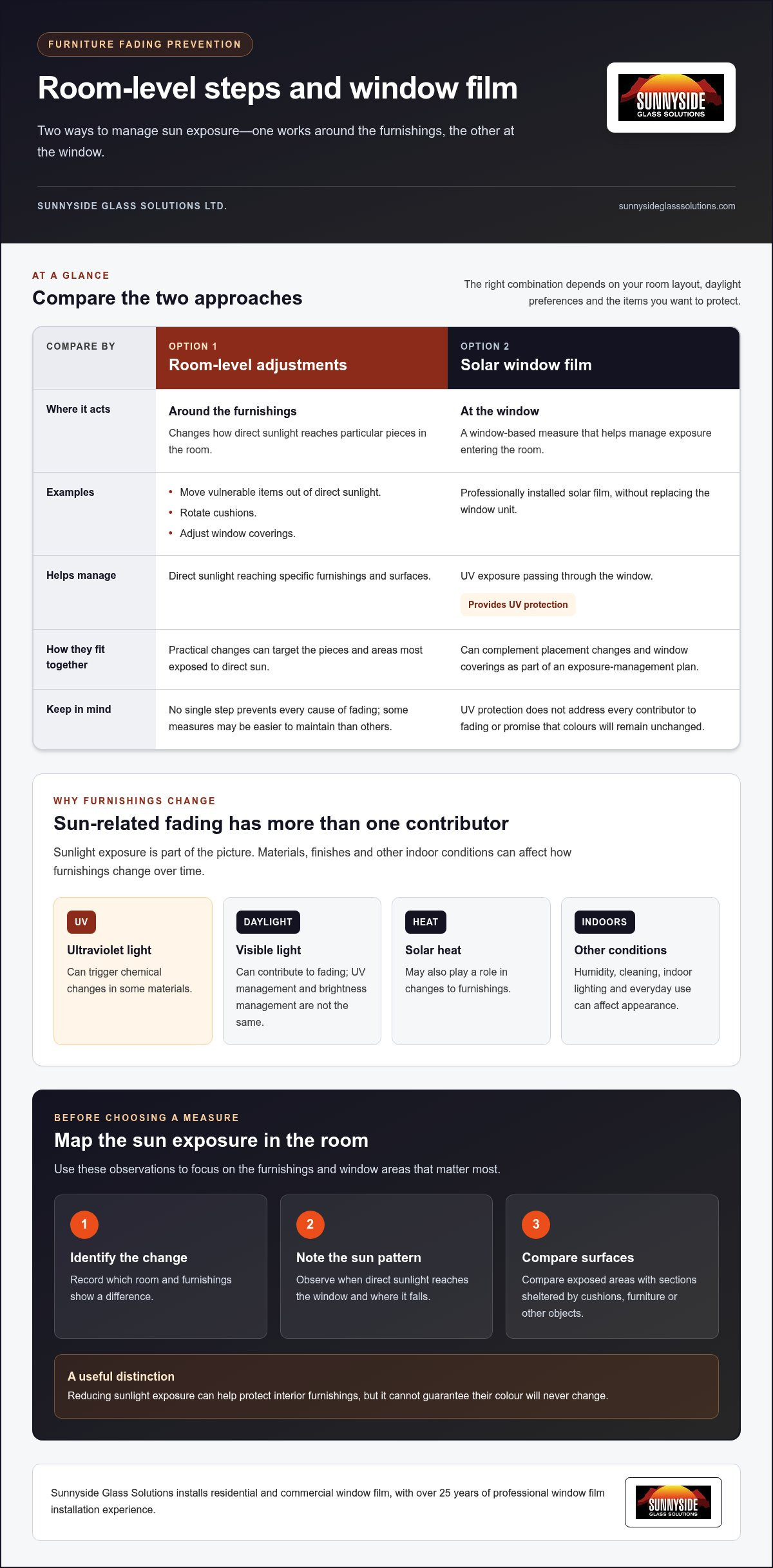
Furniture-care habits and window film can work together. Room-level changes reduce the direct sunlight reaching particular pieces, while solar film is applied at the window to help manage exposure entering the room. The best combination depends on your layout, daylight preferences and the furnishings you want to protect.
Use this comparison to match each measure to the problem it addresses. No single step prevents every cause of fading, and some measures may be easier to maintain than others.
Simple steps that reduce direct exposure to furnishings
Start with changes that fit your space. If a sofa sits in a strong patch of direct sun, move it farther into the room if there’s enough space to keep the area comfortable and usable. Rotate removable cushions or turn a rug periodically so the same section is not always facing the window. High-quality adjustable coverings, such as custom treatments from Luxe Drapery and Shades, can also help moderate daylight during periods of direct exposure without keeping the room dark all day.
When solar window film may suit the room
Film may be worth considering if sunlight continues to reach furnishings through a window and rearranging the room or adjusting coverings does not suit your needs. Sunnyside Glass Solutions installs solar window film for homes and businesses, providing UV protection. Film can complement, rather than replace, placement changes and regular cushion or rug rotation. The guides “Protect Your Interior: Window Film for Fading Furniture” and “Professional Window Film Installation: The Ultimate Guide for Okanagan Homeowners” cover film and installation in greater depth.
If you want to prevent furniture fading from sun Kelowna rooms receive, begin with the changes that are practical in each space. Then consider whether a window-based measure could support those habits. This keeps your plan focused on actual exposure and how you use the room.
A practical plan to protect sun-exposed furniture at home
Sun exposure varies from one Kelowna home to another. Window direction, nearby shade, room layout and daily routines all affect where light falls. Base your plan on what you observe in your own space: begin with simple, reversible changes, then consider a window-based option if you’ve identified where it may help.
Assess the window, room, and furniture together
Consider the window and the furnishings in its path as one connected space. Note when direct sunlight reaches the room and which parts of the floor, upholstery or rugs it touches. Compare exposed surfaces with areas usually covered by cushions or objects, and note any existing colour differences. Consider how you use the room, too. A reading area or workspace may need daylight even if you want to reduce direct exposure on a nearby chair.
Choose prevention steps that fit the space
Use this sequence to move from observation to a practical choice without assuming every room needs the same solution:
Observe the exposure. Note which windows bring direct sunlight into the room and when it reaches furnishings. Check at different times of day rather than basing a decision on a single observation.
Identify vulnerable items. List the furnishings and finishes you’re most concerned about, such as a favourite chair, a rug or artwork. Record where any visible difference appears, especially between exposed and sheltered areas.
Adjust the room. Try movable, reversible changes first. Shift a piece away from direct sun if the layout allows, rotate cushions or rugs where practical, and adjust window coverings when you want to manage incoming daylight. Keep walkways and everyday use in mind.
Consider window-based protection. If exposure continues through a window and room adjustments don’t suit your needs, professional solar window film may be an option. Sunnyside Glass Solutions installs solar window film, which provides UV protection. This is a longer-term consideration, separate from moving furniture or adjusting coverings.
Checklist: observe when and where sunlight falls, identify affected furnishings, try practical room adjustments, then consider window film if it suits the space.
There’s no need to change everything at once. Try one adjustment and see whether it works with the room’s layout and the amount of daylight you want. Furniture-care habits and window film can work together: placement and coverings help manage exposure in the room, while film provides a window-based measure. Neither approach guarantees that furnishings will never change in appearance.
If window film is a suitable next step for your home, explore professional solar window film installation with Sunnyside Glass Solutions.
Sunnyside Glass Solutions: professional window film for Kelowna homes
Managing sunlight can involve practical room adjustments and decisions about the window itself. Sunnyside Glass Solutions Ltd. installs window film for residential and commercial properties. The company brings over 25 years of experience in professional window film installation, giving property owners a professional option to consider when furnishings are exposed to light through windows.
For homeowners looking to prevent furniture fading from sun exposure in Kelowna, film can be one part of a wider plan. Moving furniture or adjusting window coverings may help manage exposure in a particular room. Solar window film takes a window-based approach and provides UV protection, with additional benefits that may suit other priorities, including improved energy efficiency, privacy and security. Sunnyside Glass Solutions serves property owners in Penticton, Kelowna, Summerland, Peachland, West Kelowna and Vancouver.
What to expect from a project-specific window film solution
Every property has its own windows, room uses and priorities. A project-specific solution can be shaped around what you want to address, whether that’s UV exposure near furnishings or broader concerns such as privacy, security or energy efficiency. These priorities help guide a window film installation plan. The goal is to consider how film fits the property and your needs, rather than assume every room requires the same approach.
Window film is not a guarantee against all fading, since furnishings may change for reasons beyond UV exposure. It can be part of a considered effort to manage exposure through the glass. Room-level measures still matter: adjust placement, cushion rotation and window coverings to suit how you use each space. Together, these choices offer more than one way to manage sunlight without treating film as a replacement for everyday furniture care.
Explore window film installation in Kelowna
If you’ve noticed a recurring patch of sunlight reaching valued furnishings, that’s a useful starting point for deciding whether a window-based measure fits your project. Consider which rooms and windows matter most, and whether UV protection, energy efficiency, privacy or security aligns with your priorities. Sunnyside Glass Solutions provides professional window film installation for Kelowna homes and commercial properties.
A thoughtful plan can start with simple furniture adjustments and include film if it suits your needs. Window film may help manage UV exposure entering through a window, while placement and coverings remain useful ways to manage the room itself. Neither approach promises that furniture colour will remain unchanged, but both can form part of a practical strategy for caring for your interior.
To explore professional window film installation for your Kelowna property, explore Sunnyside Glass Solutions.
Choose the next step that fits your home
Start with one room rather than changing every window or rearranging the whole home. Choose a space where sunlight regularly reaches furnishings you care about, then consider what matters most there: keeping the room’s current feel, maintaining natural daylight or adding a window-based layer of protection. This gives you a clear starting point for deciding whether a small layout adjustment is enough or whether professional window film is worth exploring.
There’s no single approach for every Kelowna property. Your windows, how you use each room and the furnishings you want to protect all shape the decision. Matching the next step to your priorities can help you manage sun exposure while keeping the look and feel you want for your home.
To explore a window-film solution for your property, explore Sunnyside Glass Solutions. Start with the rooms and windows that matter most, then choose the approach that fits your needs.
Frequently Asked Questions
Can sun-faded furniture be restored?
Whether restoration is possible depends on the material, finish and extent of the colour change. Some changes may be difficult to reverse, so cleaning or refinishing may not return an item to its original appearance. If you’re concerned about a valued piece, identify the material and finish before choosing a restoration approach, and focus on reducing further exposure.
Does rotating cushions help prevent furniture fading?
Rotating cushions can spread exposure across different surfaces, but it does not block sunlight or prevent fading on its own. Turn or switch removable cushions so the same face isn’t always oriented towards a bright window. How useful this is depends on the furniture design and room layout. Combine rotation with placement or daylight-management measures that suit how you use the space.
Can curtains alone protect furniture from sun fading?
Curtains can reduce direct sunlight while closed, but their effect depends on when you draw them and how much daylight still enters the room. Consider when you use the space: closing curtains during periods of direct sun may suit one room, while another may need natural light for work or daily activities. Working with custom treatment providers such as The Window Valet allows homeowners to install versatile shading tailored to their space, and adjustable coverings can readily be combined with furniture placement or window-based options.
Does window film stop furniture from fading completely?
No. Window film does not guarantee that furnishings will never fade. Sunnyside’s window film provides UV protection, which can help manage UV exposure through the glass, while visible daylight and other factors may still affect materials. If you want to prevent furniture fading from sun Kelowna homes receive, consider film alongside room-level measures such as furniture placement and window coverings, rather than relying on it alone.
How can I tell whether sunlight is affecting furniture in my home?
Look for a difference between a surface regularly exposed to light and one that has been covered or shielded. Move a cushion or small object and compare the area beneath it with the surrounding surface. Note which window is nearby and when direct sunlight reaches the item. These observations can help you decide whether a room adjustment or window-based approach suits the situation.
Is solar window film a good option for a Kelowna home with sun-exposed furniture?
Solar window film may suit a Kelowna home if sunlight entering through the windows remains a concern after you’ve considered furniture-care steps. Sunnyside Glass Solutions installs window film for residential properties, providing UV protection and improved energy efficiency. The right approach depends on your property and priorities. Film can complement furniture placement or window coverings, helping manage exposure without promising complete fade prevention.
Comments