
Non-Reflective Solar Film vs. Traditional Tint: The Okanagan Homeowner’s Guide

Is it possible to block the intense Okanagan summer heat without turning your windows into a series of dark, mirrored panels? Many homeowners in the valley find themselves in a difficult position; they want to protect their hardwood floors and furniture from UV damage, but they don't want to lose the crystal-clear lake or mountain views that define their property. It's a common dilemma where you feel forced to choose between indoor comfort and the very aesthetic that makes your home special.
We believe you shouldn't have to sacrifice your view to save your interior. This guide explores how non reflective solar film acts as an invisible shield, providing significant heat reduction while honouring your home's architectural style and natural light. You'll discover how this advanced technology compares to traditional tints and why it's often the preferred choice for those who value clarity. We will break down the functional benefits of each option to help you maintain a cool, protected, and beautiful living space throughout the warmest months of the year.
Table of Contents
What is Non-Reflective Solar Film and How Does it Differ?
Choosing a window treatment for your home often feels like a compromise between temperature control and aesthetic appeal. For decades, the industry relied on metallic films to bounce sunlight away from buildings, which created a mirrored, commercial look that rarely suited a residential neighbourhood. Non reflective solar film represents a fundamental shift in this technology. Instead of using shiny metals to reflect light, these films utilize advanced ceramic or carbon layers to absorb and dissipate heat. This modern glazing upgrade provides a neutral finish that respects the architectural intent of your home while delivering high-performance protection against the sun.
The primary goal of this technology is to achieve significant heat rejection without the "silvered" exterior appearance common in older products. In the Okanagan, where modern home designs frequently prioritize large windows and seamless indoor-outdoor transitions, maintaining a clean look is essential. Our specialized films provide a sophisticated barrier against solar gain, which reduces the load on your air conditioning system while simultaneously protecting your furniture from premature fading. It's a precise solution for homeowners who want the benefits of a tint without the visual weight of one.
The 'Invisible Shield' Concept for Modern Homes
Modern architecture in regions like Kelowna and Penticton thrives on clarity and natural light. Standard "blackout" or "limo" tints can darken an interior to the point where it feels disconnected from the outdoors. Non-reflective options function as an invisible shield; they maintain the original colour and transparency of the glass so your view remains unchanged. You can enjoy the full brilliance of the valley landscape without the oppressive heat that usually enters through untreated windows. This technology allows natural light to flood your living spaces while it silently filters out the invisible rays that cause discomfort. It's a way to preserve the brightness you love while removing the heat you don't.
Spectrally Selective vs. Standard Tinting
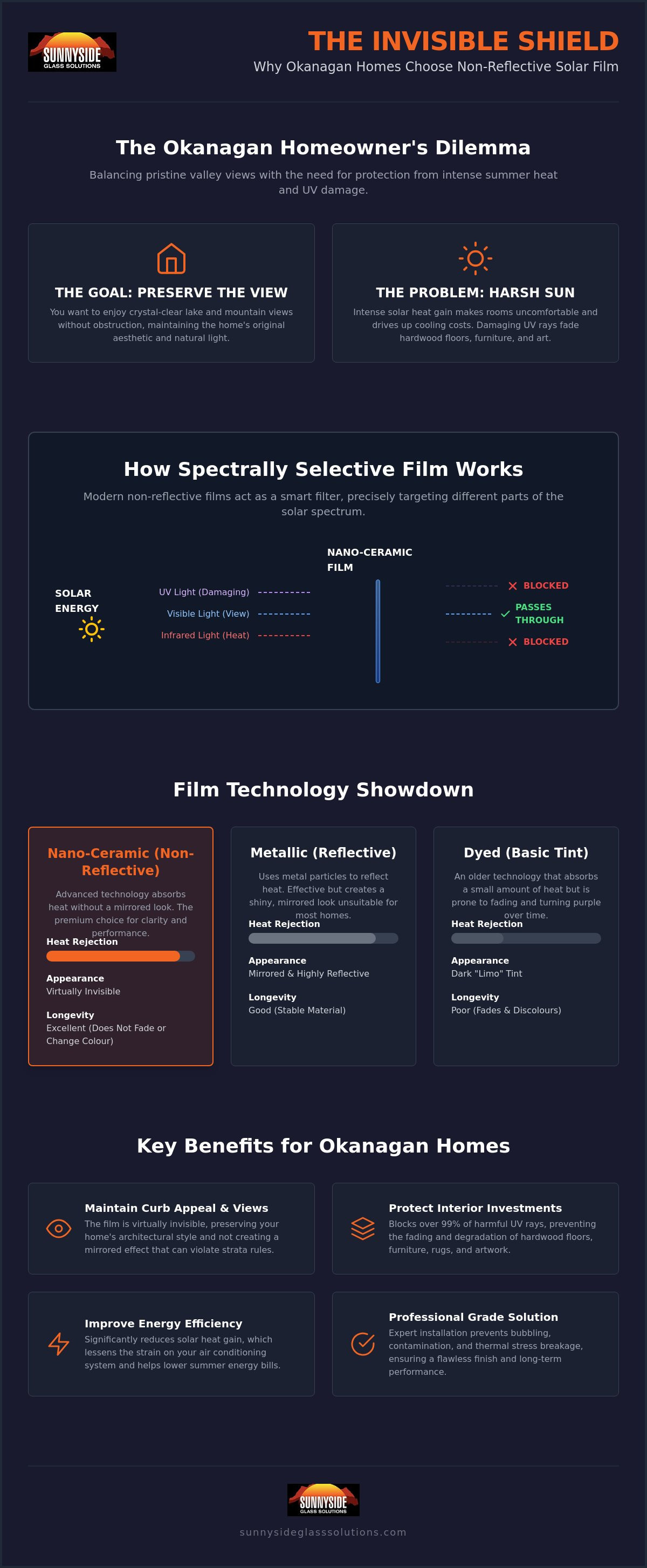
To understand the effectiveness of these products, we must look at how they interact with the solar spectrum. Window insulation film has evolved to become "spectrally selective," meaning it can identify and target specific wavelengths of energy. While traditional tints might block all light indiscriminately, these advanced films specifically filter out infrared heat and ultraviolet (UV) rays. Spectrally selective films act as a high-tech filter, allowing you to organize your home’s climate without altering its visual character. By ignoring the visible light spectrum and focusing on the heat-carrying rays, the film keeps your home bright and airy. This precision ensures your cooling system doesn't have to work as hard during a July heatwave, providing a more stable and comfortable environment for your family.
The Technology: How Ceramic and Nano-Particles Manage Heat
The effectiveness of modern non reflective solar film is rooted in its sophisticated molecular composition. Unlike traditional products that rely on heavy metals or unstable dyes, these films utilize nano-ceramic particles that are microscopic in size. These particles are engineered to be so small that they don't scatter visible light, which preserves the clarity of your glass while providing a robust barrier against energy transfer. Research from the Department of Energy on smart window film technology highlights how specific nanoparticles can selectively block near-infrared radiation, which is the primary source of solar heat gain.
In the Okanagan, where the sun beats down relentlessly throughout July and August, this stability is vital. Ceramic is an inorganic material. It doesn't break down or change colour under intense UV exposure. This is a significant upgrade from older dyed films that often turn purple or develop unsightly bubbles after just a few seasons of heat. Because ceramic particles absorb and dissipate heat rather than bouncing it back like a mirror, they provide a neutral, non-reflective finish that is virtually invisible from the street. If you want to improve your home's thermal performance without changing its look, a professional solar film installation offers a durable, high-tech solution.
Why Ceramic Outperforms Dyed and Metallic Films
Homeowners often weigh three distinct types of film technology. Metallic films offer excellent heat rejection, but they come with two major drawbacks: a "shiny" exterior appearance and the potential to interfere with cell phone or Wi-Fi signals. Dyed films are an inexpensive alternative, yet they are prone to losing their pigment and bubbling over time as the adhesive fails. Ceramic technology provides the premium middle ground. It delivers the high performance of metal without the mirrored look or signal interference, and it offers the colour stability that dyed products simply cannot match. It's a reliable choice for long-term protection.
Total Solar Energy Rejected (TSER) Explained
When comparing different products, the most important metric to understand is Total Solar Energy Rejected (TSER). This is the true measure of a film's performance. It combines the rejection of three different types of energy:
Ultraviolet (UV) rays
Visible light
Infrared (IR) radiation
Many homeowners assume that a darker film automatically blocks more heat. This is a common misconception. A high-quality, clear
non reflective solar film
can actually have a higher TSER than a very dark, low-quality dyed film. This is because the nano-particles are specifically tuned to block infrared heat, which accounts for about 50% of the sun's energy. Always look for the TSER rating to ensure you're getting the thermal protection your home requires.
Comparing Non-Reflective Solar Film vs. Traditional Reflective Tint
When deciding between film types, homeowners often weigh the immediate functional benefits against the long-term visual impact. Traditional reflective tints rely on a metallic layer to bounce solar energy away from the glass. While this is effective for heat rejection, it creates a mirrored exterior that can clash with residential aesthetics. In contrast, non reflective solar film offers a more subtle approach by absorbing energy within the film itself. This choice is particularly important in the Okanagan, where the architectural focus is often on blending the home into the natural landscape rather than creating a stark, commercial-looking facade.
The "neighbourhood factor" is a critical consideration for those living in strata-managed communities or areas with strict homeowners' associations (HOAs). In British Columbia, strata bylaws frequently prohibit any alterations that change the uniform exterior appearance of a building. Reflective films are often rejected because they turn windows into mirrors, whereas non-reflective options are generally accepted because they are virtually undetectable from the street. If you live in a multi-family development or a high-end subdivision, choosing a neutral, non-mirrored solution is the safest way to ensure compliance while still protecting your interior from the summer sun.
There is a privacy trade-off to consider between these two technologies. Reflective films provide excellent daytime privacy by making it difficult for outsiders to see in during the day. However, this same reflective quality creates an "internal mirror" effect at night. When the lights are on inside, the glass becomes a mirror, blocking your view of the stars or the city lights. Non reflective solar film does not provide that one-way mirror privacy, but it preserves your evening views perfectly. This ensures you can see out across the valley regardless of the time of day, which is a significant advantage for homes designed around a specific vista.
Aesthetic Impact and Curb Appeal
The visual difference between these two options is most apparent on lakefront properties or homes with expansive glazing. A mirrored tint can make a home look closed off and industrial, which often detracts from the property's value. To realize the best look for your specific architectural style, you must consider how the glass interacts with the surrounding environment. Non-reflective films maintain the "open" feel that defines Okanagan living, allowing the natural beauty of the valley to remain the focal point of the property from both the inside and the street.
Heat Rejection and Interior Comfort
Performance was once the main reason people chose reflective tints, as metals were historically better at blocking heat. However, the gap has closed significantly with the advent of nano-ceramics. Modern non-reflective solutions are exceptionally efficient at managing "hot spots" near large south-facing windows, which are common in our region. To understand the full range of options available for your property, you can consult The Ultimate Guide to Residential Window Film for Okanagan Homeowners for a deeper dive into specific performance data and material choices.
Why Okanagan Homeowners Prioritize Non-Reflective Solutions
Living in the Okanagan means dealing with some of the highest UV levels in British Columbia. During July and August, communities like Kelowna, Penticton, and Summerland experience prolonged exposure to intense sunlight that is far more aggressive than the coastal conditions found in Vancouver. This isn't just a matter of indoor temperature; it's about the cumulative damage caused by solar radiation. By installing non reflective solar film, you can block 99% of these harmful UV rays. This allows you to keep your blinds open and enjoy the valley views without worrying about the invisible forces damaging your home's interior.
The geographical layout of the valley presents unique challenges for property owners. Homes in West Kelowna or Peachland are often perched on hillsides with expansive glass walls designed to capture the lake. These properties catch the full force of the afternoon sun as it sets over the mountains, which can lead to extreme solar gain. For these homeowners, the priority is typically a solution that provides maximum heat rejection without compromising the very vistas that define their property. A neutral, high-performance film is the most effective way to balance these needs.
Protecting Your Interior from High-Altitude UV
Damage to your home's interior is caused by what professionals call the "fading triangle." This consists of UV rays, visible light, and solar heat. While UV rays are responsible for about 40% of the fading, the remaining 60% comes from the heat and light that flood through untreated glass. In the Okanagan, protecting your interior is a matter of preserving your investment from the relentless high-altitude sun. A quality non reflective solar film addresses all three factors simultaneously. It filters the light and rejects the heat while nearly eliminating UV, ensuring that your expensive cherry wood floors, wool area rugs, and fine artwork don't lose their vibrancy over time.
Compatibility with Low-E and Sealed Window Units
Modern BC homes typically feature double-pane, sealed window units, often equipped with Low-E coatings. Applying the wrong type of film to these windows can lead to thermal stress. This occurs when the glass absorbs too much heat and expands unevenly, which can cause the glass to crack or the seal to fail. Non-reflective ceramic films are often the safest choice for modern BC windows because they manage heat absorption more predictably than dark, dyed alternatives. If you've noticed fogging or moisture between your panes, you may need to consult our Comprehensive Guide to Sealed Window Unit Replacement in the Okanagan before considering a film application.
To ensure your home is equipped with the most compatible and effective protection for your specific glass type, you can book a professional solar film installation with our experienced team.
Professional Installation: Selecting the Right Film for Your Home
While some online retailers suggest that window film is a simple weekend project, the reality of high-performance application is far more complex. A DIY approach carries significant risks, including dust contamination, unsightly bubbling, and even permanent glass breakage if the film is incompatible with the window type. In the Okanagan, where many homes feature advanced glazing, an improper application can also void your original window manufacturer's warranty. Professional installation ensures that your non reflective solar film is applied in a controlled environment with the precision required for a seamless finish.
A professional assessment is the first step toward a successful outcome. We evaluate whether your glass is tempered, annealed, or equipped with existing Low-E coatings before recommending a specific product. This technical oversight prevents thermal stress, a condition where the glass expands at different rates and eventually cracks. By choosing an expert, you gain the peace of mind that comes from knowing the product is perfectly matched to your home's unique requirements. It's a reliable way to protect your investment while ensuring the longevity of your windows.
The Sunnyside Glass Solutions Ltd. Advantage
With over 25 years of local experience serving the region from Penticton to Vancouver, our team understands the specific challenges of the regional climate. We utilize a "glass-first" approach that sets us apart from standard tint shops. Before we ever apply a piece of non reflective solar film, we conduct a thorough inspection of your windows. If we discover a blown seal or moisture between the panes, we can address it through our sealed unit replacement services before the film is installed. For a deeper look at our process, you can read our Professional Window Film Installation: The Ultimate Guide for Okanagan Homeowners.
When selecting an installer in the Okanagan Valley, consider this checklist:
Does the company have extensive local experience with high-UV environments?
Do they provide a comprehensive warranty that covers both the film and the labour?
Can they assess the health of your sealed window units before starting?
Do they offer a range of non-reflective, ceramic options tailored to residential views?
Maintaining Your New Window Film
Once your installation is complete, the film requires a curing period to bond fully with the glass. This process typically takes about 30 days, depending on the sun exposure and temperature. During this time, you may notice small water bubbles or a slight haziness; these are a normal part of the drying process and will disappear on their own. We recommend waiting until the curing period is over before your first cleaning. To preserve the clarity of the film, avoid any cleaning products containing ammonia. Instead, use a soft microfibre cloth and a mild, non-abrasive soap solution. This simple care routine ensures your film remains clear and effective for decades.
Elevate Your Home’s Comfort and Clarity
Maintaining a comfortable home in the Okanagan shouldn't mean living behind dark or mirrored glass. By choosing non reflective solar film, you can effectively manage the intense valley heat while preserving the crystal-clear views of the mountains and lakes that make this region so special. This advanced technology provides a neutral, sophisticated finish that protects your interior investments from UV damage without altering your home's architectural style or curb appeal.
With over 25 years of local experience, our team understands the unique sun angles and climate challenges of the Okanagan Valley. We specialize in both high-performance film installation and sealed unit replacement, ensuring that every solution is perfectly matched to the health and type of your existing glass. From Kelowna to Penticton and across the surrounding valley, we provide the reliable craftsmanship and durable results you expect for your property.
Take the next step toward a more efficient and beautiful home. Request a Professional Window Film Quote for Your Okanagan Home and enjoy the peace of mind that comes from expert protection. We look forward to helping you enhance your living environment.
Frequently Asked Questions
Does non-reflective solar film provide privacy at night?
Non-reflective film does not offer the same one-way mirror privacy that reflective tints provide during the day. Because this technology relies on absorption rather than reflection, interior lights will make the glass transparent to those outside once the sun goes down. If nighttime privacy is a primary requirement for your home, you will still need to utilize traditional window treatments like blinds or drapes.
Will non-reflective film make my house too dark inside?
No, modern non reflective solar film is available in various light transmission levels to suit your specific needs. You can select a high-performance ceramic option that is virtually clear, allowing the majority of visible light to enter while still blocking the majority of infrared heat. This ensures your living spaces remain bright and airy while significantly improving your daily comfort.
Can non-reflective solar film be installed on Low-E windows?
Yes, these films are compatible with Low-E glass, provided the correct material is selected to manage thermal stress. We perform a professional assessment of your sealed units to ensure the film's heat absorption properties don't exceed the safety limits of your windows. This precision prevents glass breakage and ensures the film works in harmony with your existing energy-efficient coatings.
How much heat can I expect to reduce with ceramic window film?
You can expect a substantial reduction in solar heat gain after a professional installation. High-quality ceramic films are capable of rejecting up to 79% of total solar energy. This helps stabilize your indoor climate during the peak of an Okanagan summer, which often reduces the demand on your air conditioning system and lowers your monthly energy costs.
How long does professional window film installation take in Kelowna?
Most residential projects in the Kelowna area are completed within a single business day. A standard home with a moderate number of windows typically requires four to six hours for a professional team to prepare the glass and apply the film. Larger properties with expansive lakefront glazing or hard-to-reach windows may require additional time to ensure a flawless, dust-free finish.
Does window film cause double-pane windows to crack or break?
Window film only poses a risk to double-pane glass if the film is incompatible with the specific glass type. We use specialized compatibility software to select films that will not cause excessive thermal expansion in your sealed units. Professional installation includes a technical review that virtually eliminates the risk of glass failure, providing a level of security that DIY products lack.
Is non-reflective film more expensive than traditional reflective tint?
Non-reflective ceramic films generally require a higher initial investment than traditional metallic or dyed tints. This price difference reflects the advanced nano-technology required to block heat without a mirrored appearance or signal interference. Many homeowners find the extra cost is justified by the superior curb appeal and the long-term durability of the ceramic material in our high-UV environment.
Can I clean my windows normally after the film is installed?
You can clean your windows using standard methods once the initial 30-day curing period has finished. It is vital to avoid any cleaning products that contain ammonia, as these harsh chemicals can eventually damage the film's protective scratch-resistant coating. We recommend using a soft microfibre cloth or a clean squeegee with a mild soap and water solution to maintain the clarity of the glass.


Excellent guide explaining the differences between non-reflective solar film and traditional tint in a way that's easy for homeowners to understand. I especially liked how it balanced performance, appearance, and energy efficiency. The insights are also valuable for anyone considering Solid Color Architectural Films to enhance both aesthetics and functionality. A very informative and practical read!