
Patio Door Security Film for Kelowna Homes and Businesses

A patio door can break without every fragment falling away. Patio door security film in Kelowna adheres to the inside of the glass and, when installed correctly, helps hold broken glass in place and within its frame after impact. The Canadian Conservation Institute explains that security films are designed to hold glass fragments together, which can also discourage or delay forced entry.
It’s understandable to want a patio door that lets in light while offering added protection. Film doesn’t make glass unbreakable, but the right type can help manage hazards from accidental breakage or impact, depending on the glass and film selected. This article explains how safety and security films work, what to consider for a home or business, and how properties in Kelowna and the Central Okanagan may differ. You’ll also learn which film features may suit a patio door and what professional installation involves.
Table of Contents
Safety film for accidental glass breakage
Security film can help delay a break-in, but it isn’t equivalent to laminated glass, security bars or a working patio-door lock. Correctly installed film holds broken glass in its frame. The Canadian Conservation Institute says this can discourage or delay forced entry, while bars physically obstruct access and locks secure the sliding panel.
For accidental breakage, safety film provides a practical layer between people and shattered glass. It’s a thinner version of security film, used where the risk of breakage matters more than resisting a deliberate attack. A patio door beside a play area, dining space or busy walkway is one example, especially in a home with children or older adults.
After an impact, the film’s adhesive layer helps retain fragments instead of letting them fall freely. This can reduce the risk of cuts from scattered pieces, though the glass itself can still crack. For example, if a child’s toy strikes a patio-door window, the film may help keep cracked pieces together rather than allowing them to scatter across the floor.
Glass type is an important factor when choosing a film. Safety and security films perform best on annealed glass, so identifying the existing glazing helps guide the selection. Tempered glass needs particular care: safety or security film shouldn’t be installed on it without an anchoring system. Film selection and installation should account for how the glass is made and supported.
Before choosing a film, consider the door’s location and who uses the space. These steps help clarify the safety need:
Identify the glass type and whether the patio door is annealed or tempered.
Note nearby activity, such as children playing beside the glass or regular foot traffic.
Decide whether the priority is reducing hazards from accidental breakage, delaying forced entry, or both.
Safety film can also contribute to break-in and vandalism deterrence because a broken pane may stay held together rather than opening immediately. That added resistance can make entry less direct, but it doesn’t make glass unbreakable or replace a lock. For patio door security film in Kelowna, the glass type, installation method and security hardware all matter to the finished result.
For a business, the same principles apply to a glass door beside a customer area or staff workspace. Film may help contain fragments after accidental contact and make a quick opening through broken glass more difficult. It’s a protective layer, not a replacement for secure door hardware or other measures that control access.
Safety film is often used around children or older adults, where accidents near glass may occur. Its role is to help keep broken fragments from falling freely after an impact, reducing exposure to scattered glass. It doesn’t prevent a pane from cracking, so the benefit is fragment retention, not a promise that the glass will remain intact.
When considering this option, think about how close people are likely to be to the patio door during everyday use. Film is most relevant where accidental contact could put someone near broken glass, while the door’s lock and glass type remain important considerations.
Security film holding glass together under impact
Security film is designed to hold fragments together after impact, not prevent glass from breaking. Its performance depends on the film, glazing and installation details.
Holding Shattered Glass in Place
Adhesive bonds window film to the glass, so cracked pieces can remain attached to the film instead of falling freely. The Canadian Conservation Institute says security films are designed to hold fragments together, which can discourage or delay forced entry. For occupants, retaining shards may reduce scattered glass, but it doesn’t remove the need to keep clear of damaged glazing.
Consider how the film will be attached at the edges, not just to the glass surface. Film that retains fragments still needs suitable edge support to help keep the damaged pane in its frame. This distinction matters on a sliding door, where the glass panel and frame move together during ordinary use.
Film Thickness and Tear Resistance
There isn’t one thickness or tear-resistance rating that suits every sliding glass door. Choose based on the existing glass, impact risk, the film’s tested performance and whether the installation includes appropriate edge anchoring. A thicker film alone doesn’t establish how the complete glazed assembly will perform.
Ask what a stated tear-resistance rating measures and whether it applies to the film alone or to an installed system. For patio door security film in Kelowna, matching the film to the glass and frame is more useful than choosing by a number without its test context.
Requirements for Patio Door Film
Building-code, strata and insurance conditions address different concerns, so treat them as separate checks before altering a patio door. Review applicable project requirements, strata alteration rules and your insurance policy wording. These determine what applies to the property and its glazing.
Keep the product information and installation details with your home records. If the door is part of a strata property, follow that property’s approval process and rules for permitted changes, rather than assuming one requirement applies to every building in British Columbia.
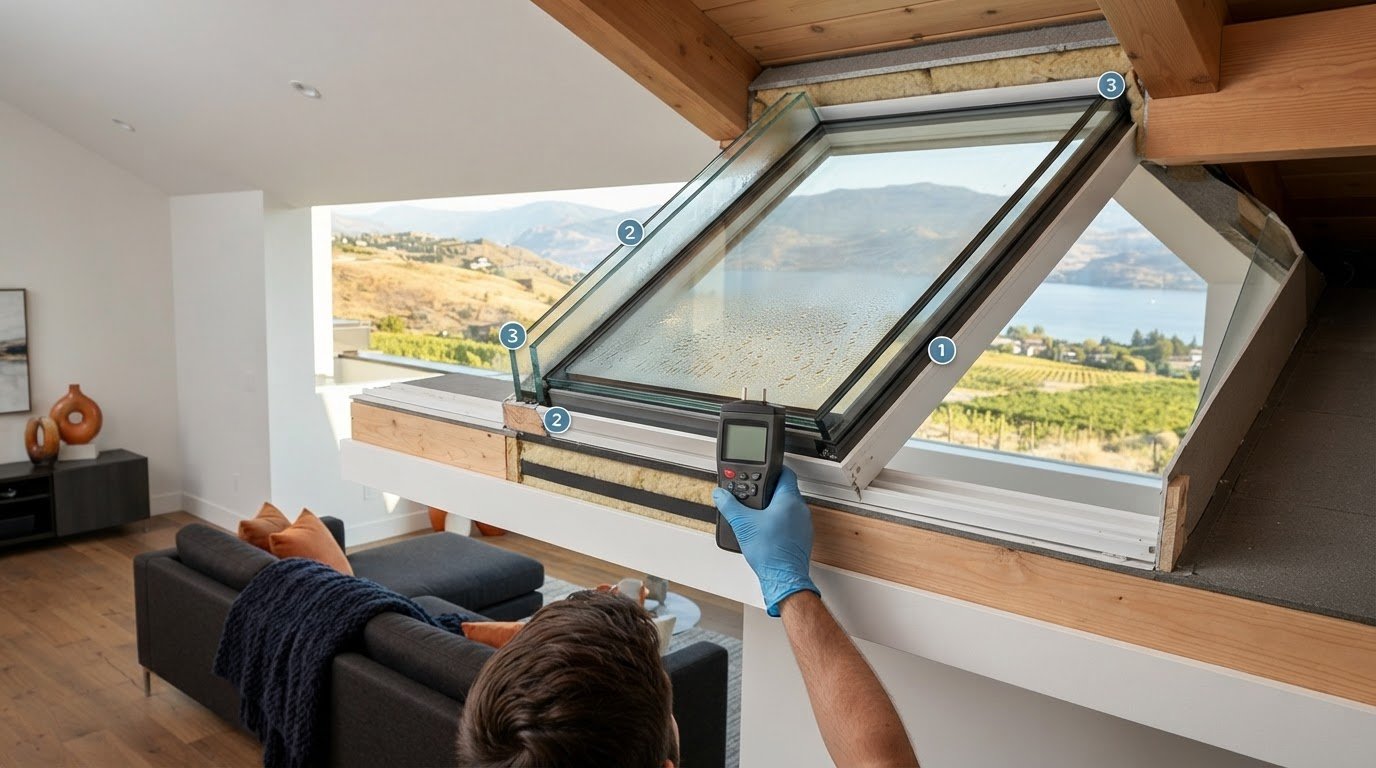
Double-pane patio doors require attention to the glass construction and seals. Film is applied to a glass surface, but suitability depends on the specific glazing and film. A proper assessment considers heat absorption and the sealed unit’s condition before installation.
Installation time depends on the door’s size, access, glass condition and preparation required. Clear the work area, move nearby furniture and remove items from the door track so the glass surface and frame are accessible.
Material and workmanship warranties have separate terms. Read what each covers, its duration, exclusions and the steps required if an issue arises. Don’t assume one warranty covers both film defects and installation.
For maintenance, avoid care that could scratch the film, and monitor its edges for lifting, peeling or damage. Service life depends on the film, exposure, installation and upkeep. Replacement decisions should account for visible deterioration and any changes to the glass or sealed unit.
For a project-specific assessment, security film installation can be considered alongside the door’s glass type, frame and intended level of protection.
Home and business security
For homes and businesses in Kelowna, patio-door security works best as a combination of measures. One reported figure attributes 70% of illegal entry to broken glass in doors and windows. Security film can add resistance at a glazed entry point, but it doesn’t replace a sound lock, secure frame or suitable access-control practices.
After impact, film is designed to help keep fragments together, making a quick opening through broken glass more difficult. The Canadian Conservation Institute describes security films as holding glass fragments together to discourage or delay forced entry. That delay may give occupants more time to respond, but film isn’t an alarm and doesn’t prevent every break-in.
Consider how a sliding door is used before deciding what protection it needs. A home patio door may open onto a fenced yard, while a business’s glazed entrance may face a public walkway. In either case, note the door’s lock, frame, sightlines and nearby items that could conceal access. This quick review helps identify whether the glass is the main concern or one part of a broader entry point.
Film may also help address vandalism. If someone strikes a glazed panel, retained fragments may reduce the chance of glass falling freely and may make the opening harder to create. Film won’t stop the impact or prevent damage to the pane. A business with a glass door near a customer area, for example, should consider both fragment retention and how staff can keep people away from damaged glass.
Use these steps to assess a home or commercial patio door:
Inspect the sliding panel, frame, lock and track for visible damage or poor operation.
Identify which glazed doors or windows are exposed to public areas or secluded access points.
Decide whether the priority is fragment retention, delaying entry, or addressing both concerns.
Consider how occupants or staff would keep clear of damaged glass and secure the area.
Security films are described as providing continuous protection, but that wording shouldn’t be read as a guarantee against intrusion. Film performance depends on the glass, attachment and installation, while locks and frames address other parts of the entry system. For a Kelowna home, pairing film with a properly functioning sliding-door lock offers a more complete approach than relying on glass alone.
Businesses across the Central Okanagan can apply the same assessment to patio doors, glazed entrances and adjacent windows. Focus on the specific opening, how people use it and what could happen if the glass breaks. This practical review helps set realistic expectations: film is a glass-retention layer that can discourage or delay entry, not a substitute for sound hardware or a complete security plan.
The page describes safety and security films as providing 24/7 protection from intruders. It also describes online demonstrations where an unprotected window is destroyed by high-powered rifle fire in one or two shots.
Service in Kelowna and the Central Okanagan
Patio-door film projects in Kelowna and the Central Okanagan start with the glass, frame and room layout. A sliding door opening onto a deck, for example, needs different access preparation than a fixed window beside a storefront. Reviewing these details helps define the work area and the film’s purpose before installation begins.
Homes and businesses across the region have different site conditions. In a Kelowna home, patio furniture, rugs and nearby plants may need to be moved away from the door. At a business, the work area might include a customer entrance or display space. Clearing the glass and its surroundings gives the installer room to prepare and apply film carefully.
Before an appointment, use a simple preparation checklist:
Move furniture, planters and loose items away from the patio door.
Keep the sliding-door track and nearby floor clear for access.
Identify visible chips, cracks or seal concerns on the glass.
Tell household members or staff which area will be temporarily unavailable.
These steps are useful whether the property is in Kelowna, West Kelowna, Penticton or Peachland. A clear work zone also helps protect nearby belongings from contact with tools or cleaning materials. For a business, directing customer movement around the work area can reduce disruption while the door is being prepared.
Check the glass condition before selecting film. A cracked pane or a sealed unit with visible moisture between panes presents a different issue from intact glass. Note the location of any damage and whether the patio door opens and closes smoothly. This information helps distinguish a film project from a glass repair or replacement need.
Properties across the region also vary in door size, access and use. A large patio panel may require more preparation than a smaller glazed door, while a commercial space may need work planned around its daily operations. These practical factors influence the installation sequence, including cleaning the glass, positioning the film and keeping the work area clear afterward.
For residents and business operators in the Central Okanagan, describe the door and the concern clearly. Mention whether your priority is retaining glass after accidental breakage, adding resistance against impact, or balancing protection with privacy. Include the glass condition, door location and any access constraints, such as furniture that cannot easily be moved.
A clear description focuses the assessment on the actual opening, rather than treating every window as identical. Whether the project is for a Kelowna residence or a business elsewhere in the Central Okanagan, the glass type, frame, access and intended use all shape the practical installation plan.
What types of security film are available for patio doors in Kelowna?
Patio-door film options vary by purpose, from helping retain glass to managing sunlight. For a Kelowna home, start by identifying whether the priority is impact resistance, comfort, privacy or a combination of needs.
Safety and security film
Safety film is a thinner version of security film, used where accidental breakage is a concern. Security film focuses on holding fragments together under impact and can discourage or delay forced entry. For example, a family may prioritize breakage protection on a patio door beside a play area, while a business may focus on added resistance at a glazed entrance.
These categories describe intended use, not unbreakable glass. Film helps hold fragments together after breakage, but the glass can still crack. Safety and security films perform best on annealed glass, while tempered glass requires an anchoring system. Identifying the patio door’s glass type helps narrow suitable options before choosing appearance or added functions.
Added film functions
Safety film is available with solar-control, privacy, glare-reducing and UV-reducing properties. These features address different needs: solar control may suit a west-facing Kelowna patio door exposed to afternoon sun, while glare reduction may help near a television or computer. UV reduction can be relevant where furniture or flooring sits close to the glass.
Privacy is another consideration for a patio door facing a neighbour’s yard or shared outdoor area. Think about when privacy matters and how much natural light the room needs. A business with a customer-facing glazed door may value a different balance than a residence with a private deck.
How to compare options
Compare films by purpose, glass compatibility and visible effect rather than relying on a label alone. A practical review can include:
The patio door’s glass type and condition.
Whether the main concern is accidental breakage, forced entry, sunlight, glare, privacy or UV exposure.
How the film will look from inside and outside the building.
Whether an anchoring system is needed for the glazing.
For example, a shaded patio may call primarily for fragment retention, while a sunlit living room could benefit from safety film with solar-control properties. Film choices should suit the door and room, not just the general category.
To discuss a patio-door project in Kelowna, request security film installation suited to the glass and the priorities of your home or business.
Sunnyside Glass Solutions: Window Film Installation
Sunnyside Glass Solutions Ltd. helps homeowners and businesses address patio-door concerns with professional window film installation. If you’re considering patio door security film in Kelowna, the glass type, frame and intended protection all inform the installation approach. For intact glass, film can be part of your plan for the door.
If the patio door has a damaged sealed unit, sealed window unit replacement may be more appropriate than applying film over a glazing problem. Describing your door’s condition and what you want to address helps clarify which service fits.
For guidance on patio door security film in Kelowna, contact Sunnyside Glass Solutions Ltd. to discuss your project.
Plan the Next Step for Your Patio Door
A useful next step is to note what you want the patio door to do better, then consider how the glass fits into the room and your daily routine. For patio door security film in Kelowna, describe the door’s condition, location and main concern before choosing a solution. A clear starting point focuses the discussion on your home or business needs.
Sunnyside Glass Solutions offers window film installation and sealed window unit replacement, as well as frameless glass showers. For intact patio-door glass where film is the right approach, its installation service can put the decision into practice. If the sealed unit needs attention, replacement addresses a different glazing need.
Take the next step at a pace that suits your project. Contact Sunnyside Glass Solutions to discuss your patio door and the result you’re looking for. A considered choice can help you move forward with greater clarity.
Frequently Asked Questions
Are there reputable security window film installers in Kelowna, BC?
Yes, Sunnyside Glass Solutions Ltd. provides window film installation, including security film, for residential and commercial property owners. Its service area includes Kelowna, Penticton, Summerland, Peachland, West Kelowna and Vancouver. For patio door security film in Kelowna, describe whether the door is at a home or business and what you want the film to address. This helps focus the discussion on your specific glass and project.
What warranties do Kelowna security film installers offer for materials and workmanship?
Material and workmanship warranties have separate terms. Review each warranty’s coverage, duration, exclusions and the steps required if an issue arises.
Comments